

Juan Fernández Cabbage Tree by Héctor Gutiérrez
Santa Clara island might be the smallest island in the Juan Fernández Archipelago (670km off central Chile), but it holds true wonders for those who are lucky to witness it. Many plants and animals can only live on these islands! Santa Clara is an uninhabited National Park that is free from introduced mammals, allowing the native flora and fauna to recover in safety. Pictured to the right, the Juan Fernández Cabbage Tree (Dendroseris litoralis).

Paola González, Guillermo de Rodt, Cabila Manríquez, Iva Vásquez, and José Cortéz
Santa Clara is so special that the Pink-footed Shearwater, an endangered migratory seabird, travels from the coast of Canada thousands of miles south to nest there! The entire known population nests on three islands in Chile: Santa Clara, Robinson Crusoe, and Mocha. Learn more about Pink-footed Shearwaters here!
In the photo to the left, the local Oikonos team and Park managers are on “cerro Johow”, the highest point on the island, monitoring Pink-footed Shearwater breeding colonies. Did you notice the majestic Robinson Crusoe Island across the horizon?
With our dedicated partners and funders, Oikonos’ local team has been documenting the recovery of Santa Clara’s ecosystem for 20 years. Learn more about our conservation efforts here.

Santa Clara Island and the other islands in the Juan Fernandez Archipelago are volcanic in origin. Photo by Héctor Gutiérrez
The Juan Fernández Archipelago
Located off the coast of Chile, the archipelago consists of three volcanic islands, Robinson Crusoe, Alejandro Selkirk, and Santa Clara. The islanders live on Robinson Crusoe and Alejandro Selkirk, while Santa Clara is uninhabited, predator-free, and part of the National Park.
Now that you’ve learned about this mighty island, stay tuned to learn more about Robinson Crusoe and Alejandro Selkirk on our future blog posts!
Learn more information about visiting the archipelago here.
April 6, 2022
Written by Gabriela Lamanna
Edited by Michelle Hester
Related Blogs
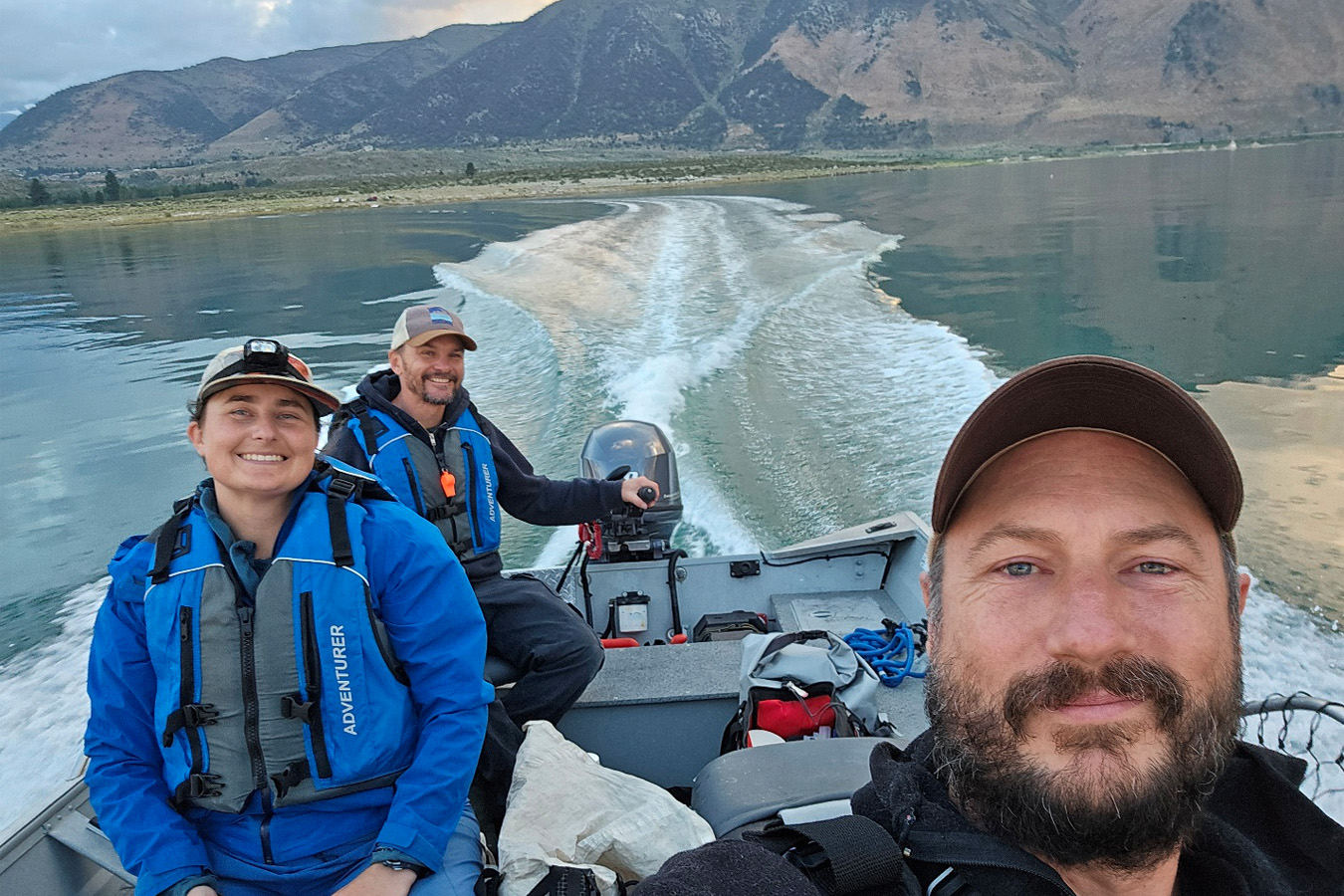
Phalarope Tagging at Mono Lake: An Update from Science Director Ryan Carle
In 2025, Oikonos launched the project “Promoting the Conservation of the Humboldt Penguin in Chile and Peru”, an initiative aimed at strengthening scientific research, environmental education, and conservation efforts for one of the most iconic species of the Humboldt Current.

The collaboration of those who work at sea every day can make a big difference in conservation: An interview with Simón Zepeda
In 2025, Oikonos launched the project “Promoting the Conservation of the Humboldt Penguin in Chile and Peru”, an initiative aimed at strengthening scientific research, environmental education, and conservation efforts for one of the most iconic species of the Humboldt Current.

Individual Actions Matter: The Humboldt Penguin Is Now a Natural Monument
Individual actions have a greater impact on the collective than we often realize. Thanks to more than 9,000 people who took part in the public consultation, the Humboldt Penguin has now been declared a Natural Monument.