
Curriculum STEM+Art
We create free lessons aligned with common core and state standards so educators have an inspiring way to teach required STEM (Science, Technology, Engineering and Math) through the eyes of animals. The formal lessons below also teach Art and Ocean Literacy and Stewardship concepts. Adaptations for virtual classroom situations were recently updated. Please contact us for questions or partnership opportunities [email protected].
Winged Ambassadors – Ocean Literacy Through the Eyes of Albatross http://www.downloadwingedambassadors.org/
English; Middle School with extensions for older grades (age 12 and above)
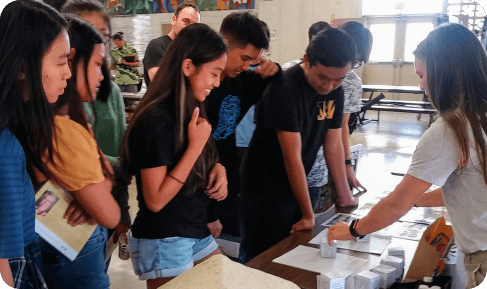
Using charismatic seabirds as the guides, “Winged Ambassadors” has been used worldwide since its launch in 2012. The program was created in partnership with NOAA to promote achievement in science by engaging middle and high school students through hands-on and inquiry-based activities focused on ocean literacy and STEM skills. The 5 lessons lead students on a journey from Hawaii to the albatross’ feeding grounds across the North Pacific. During their travels, albatross consume marine plastic, which is fed to their chicks. Students are confronted with how humans are impacting wildlife and challenged to make changes in their everyday lives. Winged Ambassadors STEM Curriculum used in 38 countries, 48 U.S. States, 5,280 educators and 358,000 students (2012 – 2021). “By the end of these lessons students excitedly come to me showing pictures of birds they took, tell me about beach clean-ups they attended, and have a new appreciation for our feathered friends. I believe this is one of the most important labs I do in the semester ” Middle School Teacher, Waianae, Hawaii
Way of the Wedgie – Survival Lessons from a Seabird Preserve
https://freemanseabirdpreserve.org/lessons
English; Middle & High Schools (ages 10 and above)
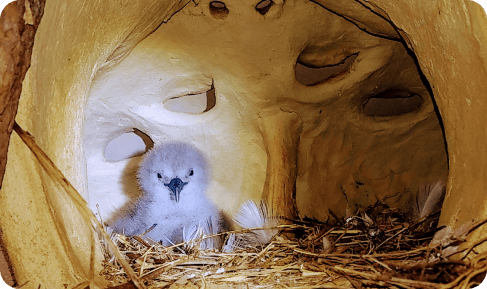
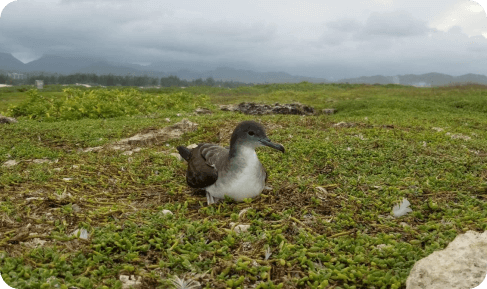
Inspired by the success of Winged Ambassadors, Oikonos replicated the curriculum model to develop “Way of the Wedgie” with Hawaii Audubon and Hawaii Pacific University. These place-based lessons highlight the seabirds returning to the Freeman Seabird Preserve on Oahu, Hawaii. The digital lessons are enhanced by classroom visits to the Preserve, where students observe researchers in action and become stewards of the land with habitat restoration activities. The lessons in the curricula and exposure to seabirds via volunteer opportunities highlight why ‘Ua’u kani are ecologically important and culturally valuable. Seeing young explorers create connections to this special place and its feathered inhabitants motivates our work.
Seabird Youth Network Lessons
http://seabirdyouth.org/invasive-species-and-seabird-curriculum/
English & Russian; Ages 10+
Invasive species have caused some of the most dramatic effects on isolated ecosystems, such as islands, and are a leading cause of species extinctions globally. The curriculum was developed in response to a need for more community outreach and education regarding invasive species and seabirds on the Pribilof Islands, Alaska and the Juan Fernandez Islands, Chile. Oikonos assisted the leading organization, Seabird Youth Network, with content in these lessons derived from our own research on seabird genetics and restoration on islands. Through the lessons and activities, students will gain knowledge by:
- Introducing concepts of seabird biology
- Exploring major threats to biodiversity and solutions
- Introduce how scientists use genetics to study threats to wildlife
- Participating in environmental stewardship
Related Species

Humboldt Penguin
Humboldt Penguin Endemic species of the Humboldt Current, an extraordinarily productive marine ecosystem.Conservation In the 19th century, hundreds...

Wedge-tailed Shearwater
Wedge-tailed Shearwater This oceanic seabird often feeds with tuna schools and serves as an important sign of ocean health in the warm waters of the...

Tufted Puffin
Tufted Puffin An iconic species of the North Pacific, the Tufted Puffin has been declining for several decades throughout much of its...

Black-footed Albatross
Black-footed Albatross A charismatic ambassador for ocean stewardship, this species travels vast distances to forage and encounters many threats...
Related Projects

Educational resources
Educational resourcesThe following free resources were created with multiple partners and there is something for all ages.Learn about unique...

Schools & Communities
Schools & Communities:Through innovation, science and art, we have promoted environmental education programs since 2002. We seek to generate...

Student scientists – plastic in albatross diet
Student scientists - plastic in albatross dietOcean pollution continues to be a global problem for ecosystems and humankind. The Student Scientist...
Wedge-tailed Shearwater
Wedge-tailed Shearwater This oceanic seabird often feeds with tuna schools and serves as an important sign of ocean health in the warm waters of the...