

Conservation
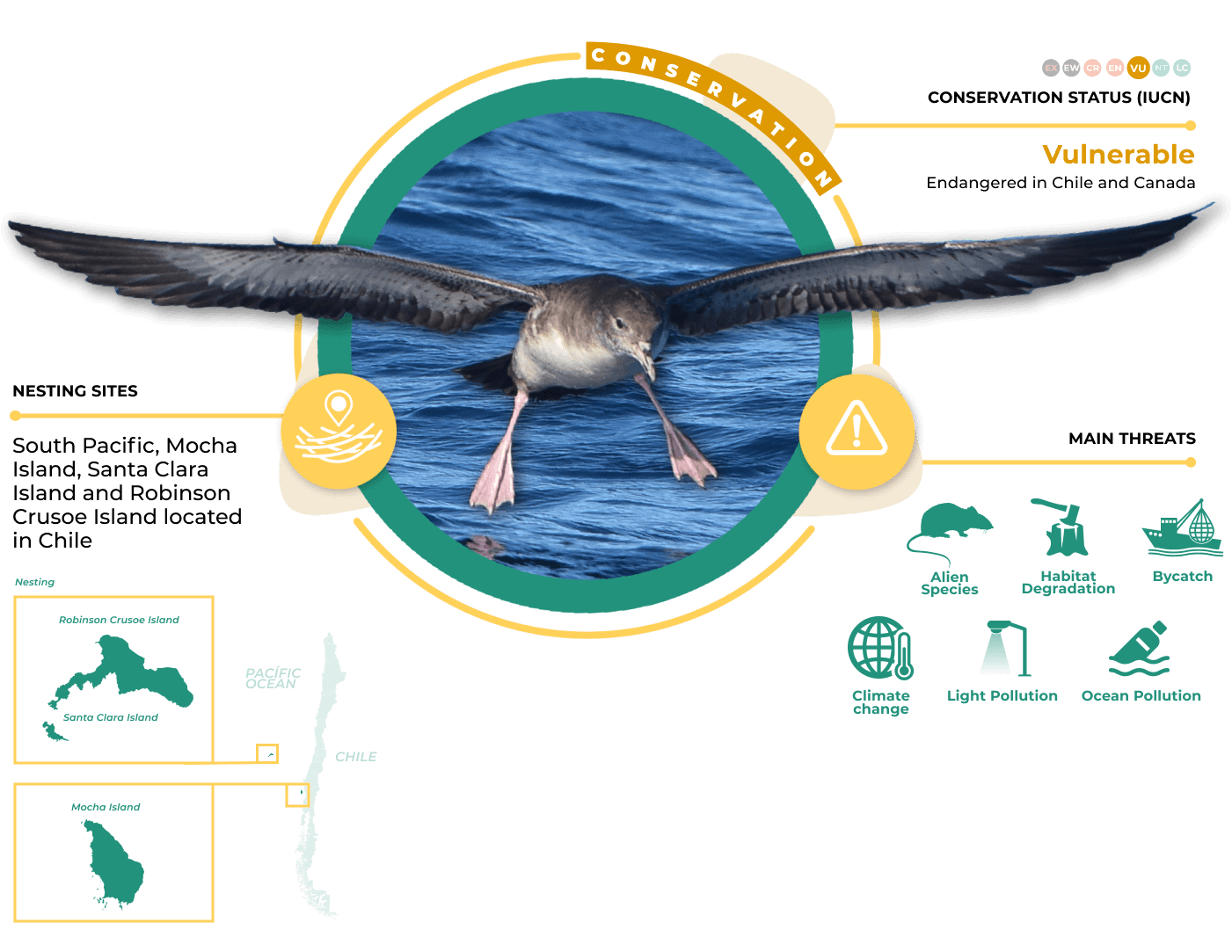
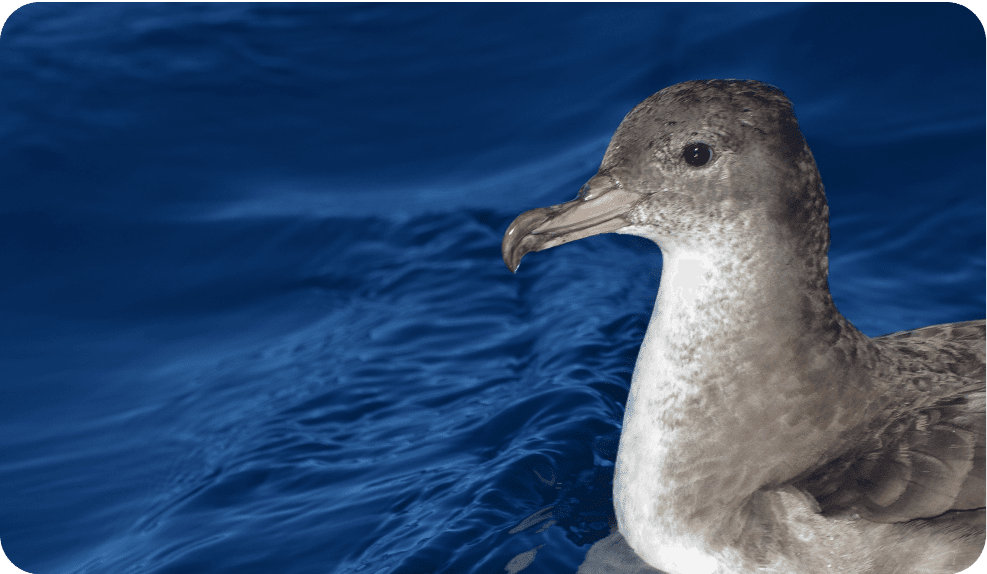
The Pink-footed Shearwater is a migratory seabird that nests exclusively in Chile, on the Juan Fernández Archipelago and Mocha Island. The global breeding population is estimated at around 140,000 pairs, but the species faces numerous threats.
At sea, thousands of shearwaters die each year due to bycatch in multiple types of fisheries, and especially purse-seine fisheries. They are also impacted by plastic ingestion and competition with industrial fishing fleets for food. On land, both chicks and adult birds fall prey to invasive species such as rats and coatis, as well as domestic dogs and cats.
Additional threats include the harvesting of chicks for human consumption, habitat degradation caused by livestock, competition with introduced rabbits for nesting burrows, and light pollution, which disorients the birds and increases their risk of collisions and predation.
Due to these pressures, the Pink-footed Shearwater is classified as Endangered in Chile and Canada, and Vulnerable globally by the International Union for Conservation of Nature (IUCN).
Since 2010, Oikonos has led research and conservation efforts for the Pink-footed Shearwater. We established the world’s southernmost exclusion fence to keep invasive mammals out of nesting areas in the Juan Fernández Archipelago. We’ve also launched rescue campaigns for birds affected by artificial lighting and promoted solutions to reduce mortality in fisheries.
Our work has supported the replacement of harmful lighting, the control of invasive species, the promotion of responsible pet ownership, and the strengthening of local capacity through environmental education and community engagement.
Most of the scientific knowledge currently available about the Pink-footed Shearwater comes from our research. We also developed the national RECOGE Plan (Recovery, Conservation, and Management) to guide the species’ conservation across Chile.
About the species
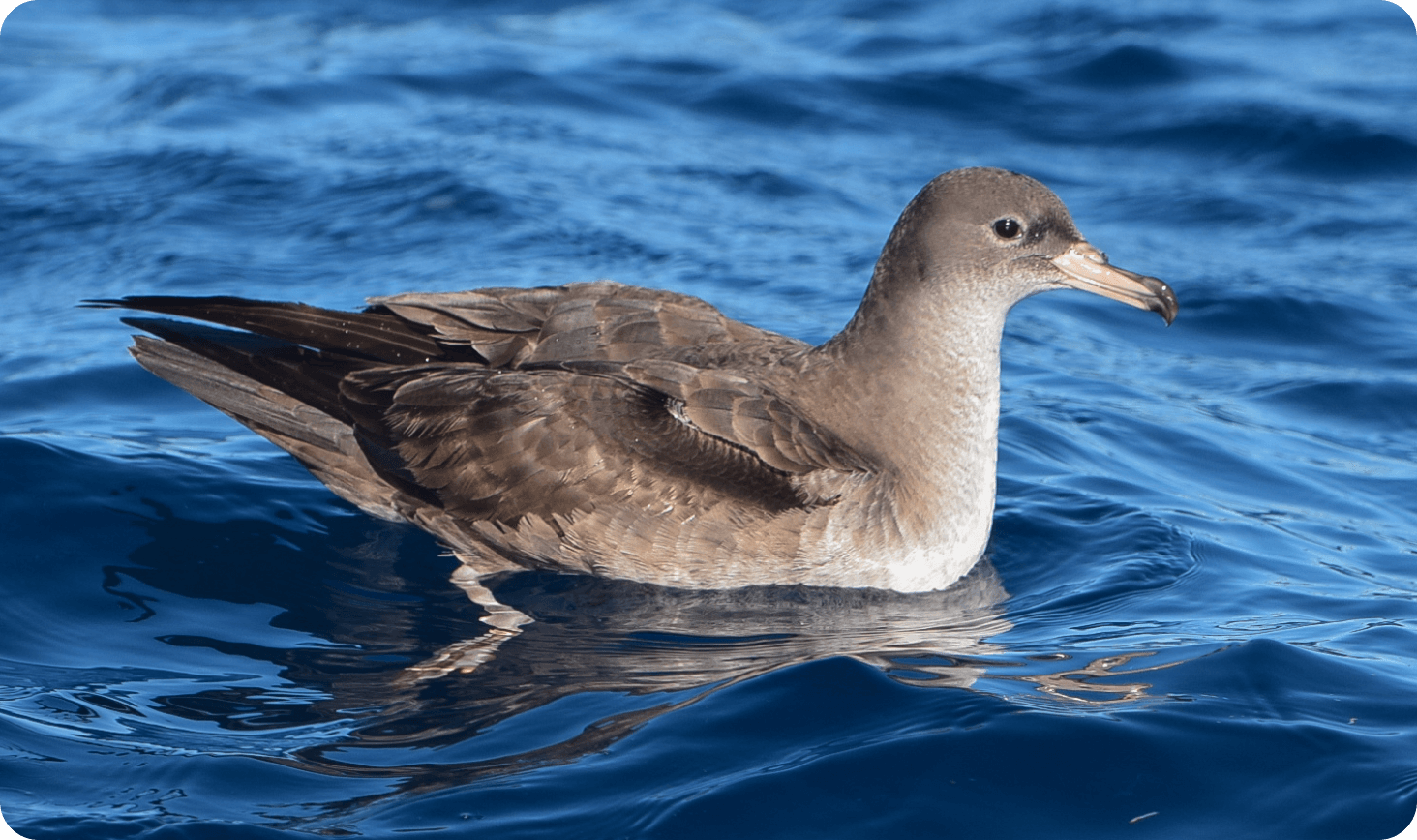
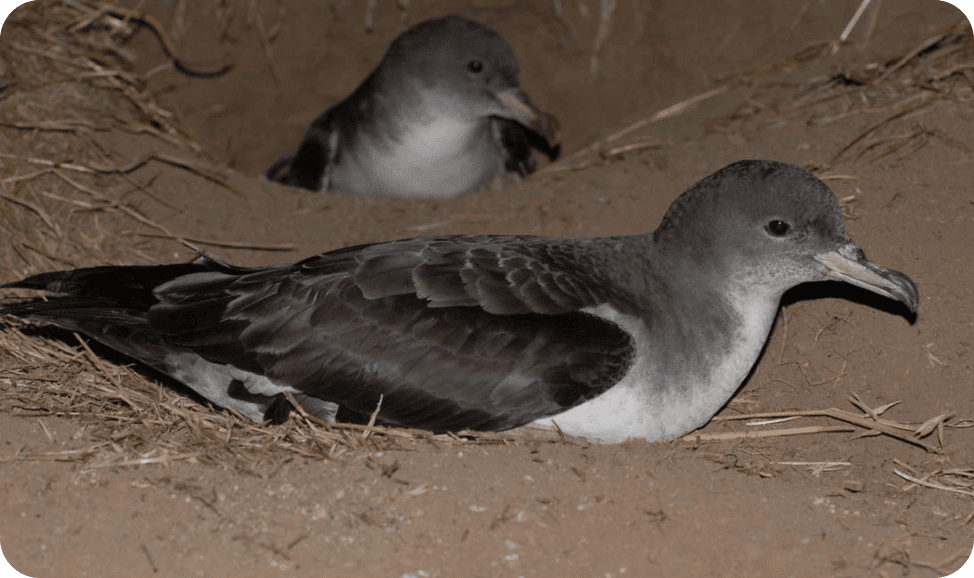
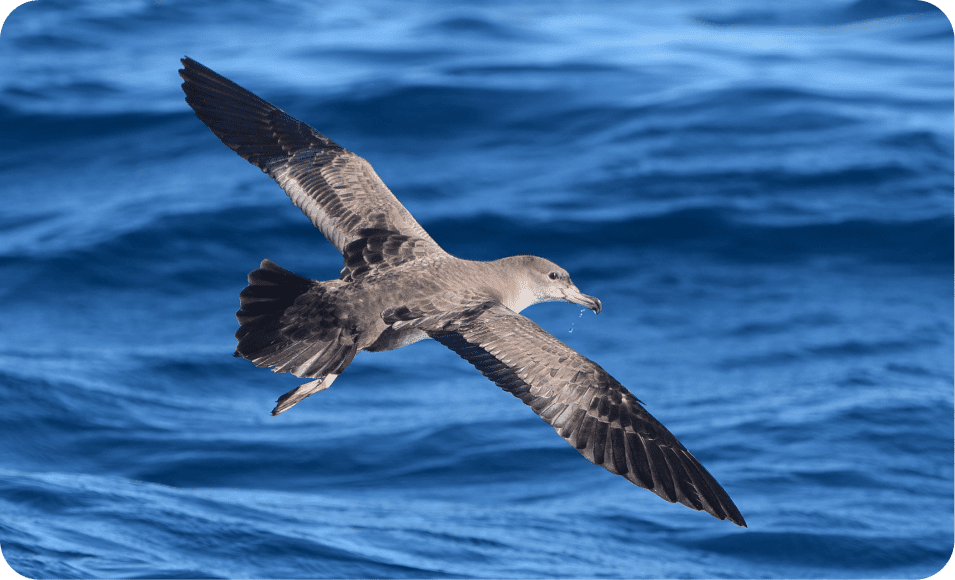
The Pink-footed Shearwater is a medium-sized pelagic seabird in the albatross family. It spends most of its life far out at sea, migrating thousands of kilometers across the eastern Pacific Ocean between South American breeding areas and wintering areas off of North America and Peru. It breeds only on three Chilean islands: Mocha, Robinson Crusoe, and Santa Clara, nesting in deep burrows dug into steep hillsides. Each pair lays just one egg per season and returns to the same burrow year after year.
Its diet consists mainly of anchovies, sardines, and squid, which it catches near the surface or at shallow depths. During the breeding season, feeding trips can span up to 300 kilometers from the colony, with some lasting as long as 13 days to bring food back to their chicks. The Pink-footed Shearwater is a long-lived species—some individuals can live up to 60 years.
Other Species

Humboldt Penguin
Humboldt Penguin Endemic species of the Humboldt Current, an extraordinarily productive marine ecosystem.Conservation In the 19th century, hundreds...

Wedge-tailed Shearwater
Wedge-tailed Shearwater This oceanic seabird often feeds with tuna schools and serves as an important sign of ocean health in the warm waters of the...

Tufted Puffin
Tufted Puffin An iconic species of the North Pacific, the Tufted Puffin has been declining for several decades throughout much of its...

Wilson’s Phalarope
Wilson’s Phalarope A small and charming migratory shorebird that specializes on saline lake habitats, the Wilson’s phalarope is threatened with...

Cassin’s Auklet
Cassin’s Auklet Experts at diving for small krill and larval fish, these seabirds are vulnerable to changes in ocean temperature and...

Masafuera Rayadito
Masafuera Rayadito It is a poorly known and critically endangered landbird unique to only one island in the worldNatural history Endemic to the...

Juan Fernández Firecrown
Juan Fernández Firecrown Endemic to Robinson Crusoe Island and on the verge of extinction.Natural history Only inhabits the native forest of...

Black-footed Albatross
Black-footed Albatross A charismatic ambassador for ocean stewardship, this species travels vast distances to forage and encounters many threats...