

Natural history
The northern fulmar, a member of the tube-nose family, breeds in remote colonies in Alaska, the Canadian Arctic, and the boreal zone of the northeast Atlantic Ocean. Like their shearwater and albatross relatives, fulmars reach maturity at a late age, raise just one chick a year and live long lives. They are dependent on foraging for fish, microzooplankton, and squid at or near the sea’s surface.

Conservation
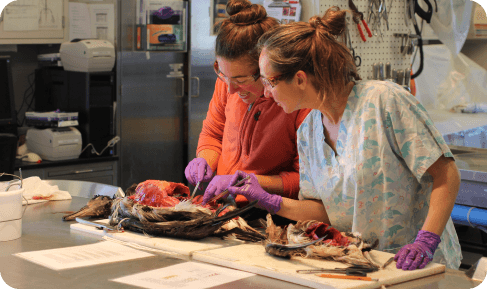
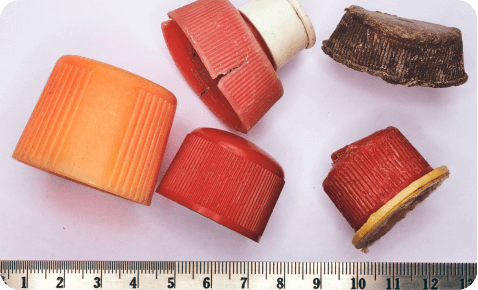
Northern Fulmars represent more than half of seabird bycatch in U.S. groundfish and halibut fisheries in the North Pacific. At our Santa Cruz Lab, Oikonos studies fulmar specimens collected on fishing vessels. We partner with UC Santa Cruz, SWFSC, and NOAA to investigate the genetic origins and demographic makeup of fulmars killed in bycatch, and to track the plastic pollution that fulmars mistake for food on the sea surface. To disseminate our findings and support seabird education efforts in the Alaska region, we partnered with Auk Ecological Consulting and the Seabird Youth Network.


Related species

Humboldt Penguin
Humboldt Penguin Endemic species of the Humboldt Current, an extraordinarily productive marine ecosystem.Conservation In the 19th century, hundreds...

Wedge-tailed Shearwater
Wedge-tailed Shearwater This oceanic seabird often feeds with tuna schools and serves as an important sign of ocean health in the warm waters of the...

Tufted Puffin
Tufted Puffin An iconic species of the North Pacific, the Tufted Puffin has been declining for several decades throughout much of its...

Wilson’s Phalarope
Wilson’s Phalarope A small and charming migratory shorebird that specializes on saline lake habitats, the Wilson’s phalarope is threatened with...

Cassin’s Auklet
Cassin’s Auklet Experts at diving for small krill and larval fish, these seabirds are vulnerable to changes in ocean temperature and...

Masafuera Rayadito
Masafuera Rayadito It is a poorly known and critically endangered landbird unique to only one island in the worldNatural history Endemic to the...

Juan Fernández Firecrown
Juan Fernández Firecrown Endemic to Robinson Crusoe Island and on the verge of extinction.Natural history Only inhabits the native forest of...

Black-footed Albatross
Black-footed Albatross A charismatic ambassador for ocean stewardship, this species travels vast distances to forage and encounters many threats...