
Forage fish
Small fishes known as “forage fish,” such as anchovies and sardines, are vital to the health of our oceans. Seabird diets provide a valuable indicator of the status of forage fish populations that can be used to track responses to changes in ocean conditions. We study the diets of auklets and cormorants in central California, providing a multi-decadal picture of ecosystem change. We also study forage fish via seabird diets in Hawaii, and how seabirds interact with sardine and anchovy fisheries in Chilean waters.
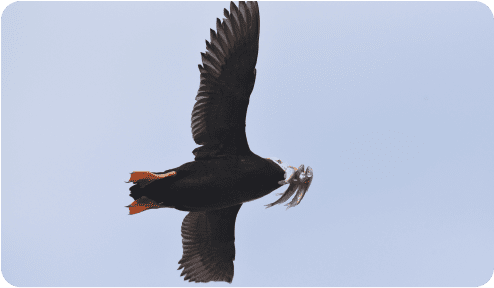
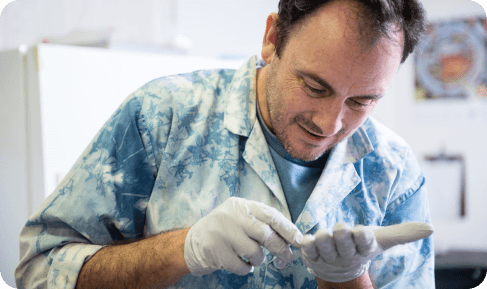

How can a seabird help us understand ocean health? To learn more about the importance of Northern Anchovy at Año Nuevo Island, view this resource created by Doris Duke Conservation Scholar Tahiry Langrand.
Vision
We continue to annually study the diet of focal species in California, Hawaii, and Chile, and need support to expand seabird diet analysis to better inform marine conservation and fisheries.
Partners and Funders:
NOAA Saltonstall-Kennedy Program, Patagonia Santa Cruz, and many generous individual donors. We partner with organizations such as Point Blue, NOAA Southwest Fisheries Science Center, the Farallon Institute, and others to better understand and protect nearshore marine ecosystems.
Related Species

Wedge-tailed Shearwater
Wedge-tailed Shearwater This oceanic seabird often feeds with tuna schools and serves as an important sign of ocean health in the warm waters of the...

Pink-footed Shearwater
Pink-footed Shearwater A remarkable seabird that travels thousands of kilometers across the Pacific Ocean, returning to just three Chilean islands...
Related Projects

Sustainable Fisheries: reducing seabird bycatch
Sustainable fisheries: reducing seabird bycatchWe research and implement mitigation measures to reduce threats from bycatch, the leading cause of...