

Conservation
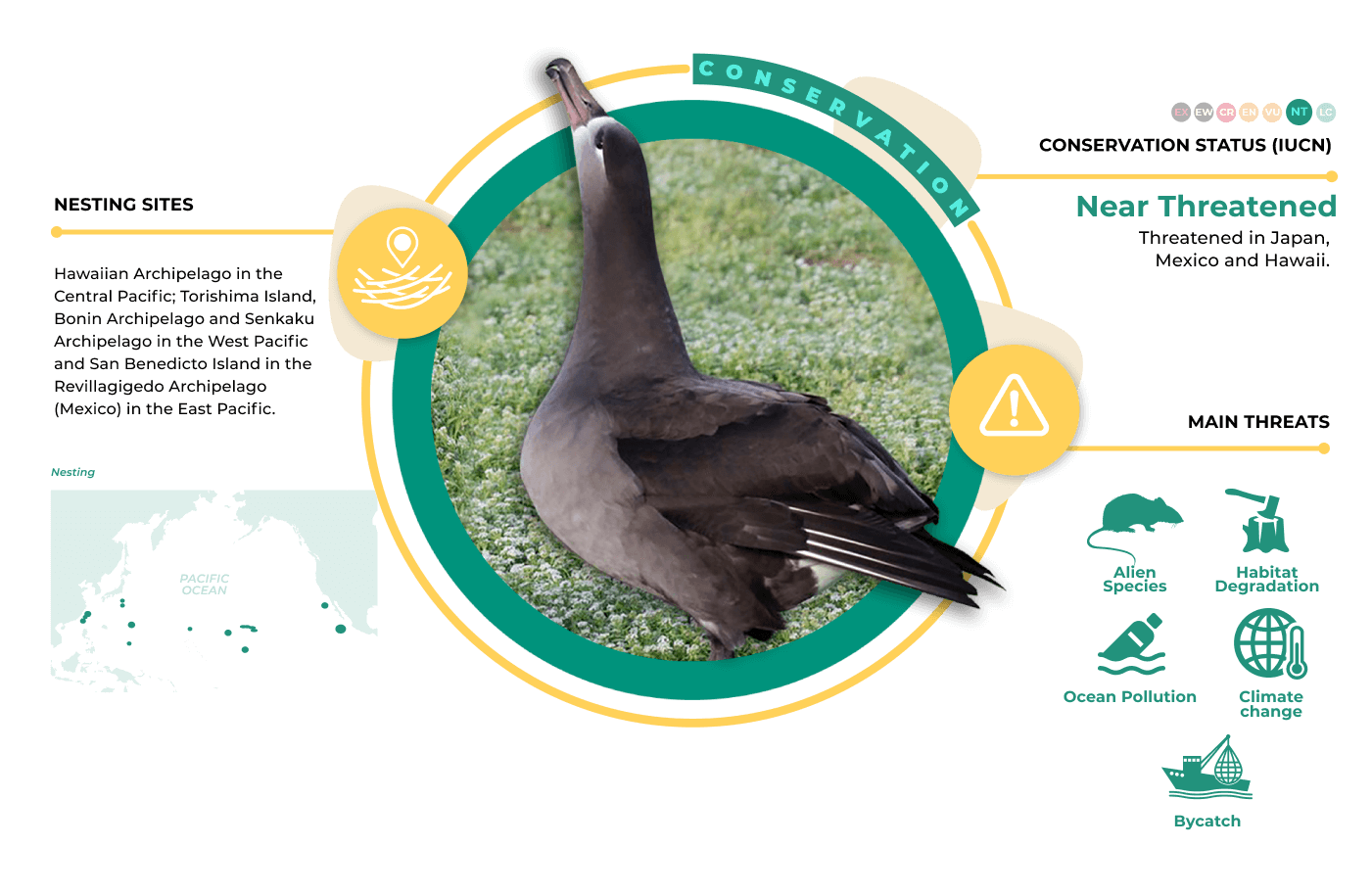
Because Kaʻupu (Black-footed Albatross in Hawaiian) range throughout the North Pacific, they are susceptible to threats both in national waters and the high-seas. Thus, international collaboration is critical for their conservation. Oikonos led research to learn their movements across the North Pacific from Hōlanikū (Kure Atoll), Kamole (Laysan Island), and Lehua Islet nesting colonies, and at-sea in Cordell Bank National Marine Sanctuary (California coast). We discovered the importance of the western regions of the North Pacific for Kaʻupu. Movement data identified that Japan, Russia, Canada, and the U.S. have responsibility for protecting albatrosses that enter their waters.
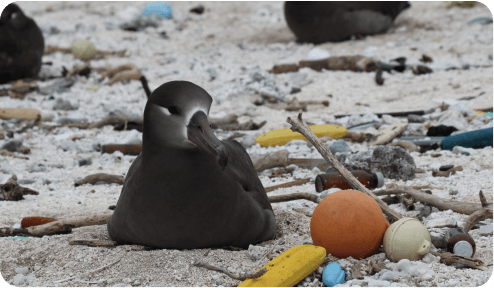
Since 2008, Oikonos and NOAA have managed a necropsy program to identify and investigate the demography of seabird carcasses brought back by fishery observers. Kaʻupu are the most often incidentally killed in the Hawaiʻi-based longline fishery. This albatross is also a focal species of Oikonos’ marine debris research, education, and prevention programs. By providing science-based justifications for decreasing plastic consumption, and improving waste management, we strive to reduce the alarming amount of plastic trash ingested by albatrosses and other marine wildlife.
About the species
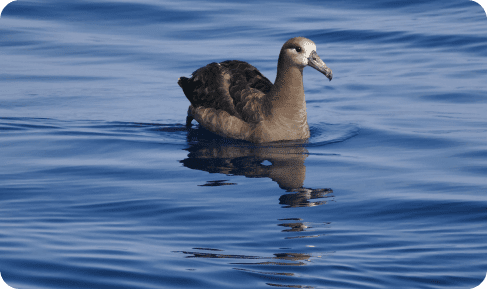
The Black-footed Albatross is one of three albatross species that breed in the North Pacific, with nesting sites in Hawaiʻi, Japan, and Mexico. These long-lived seabirds usually lay one egg every 1–2 years and often return to their birth colony to find a mate. Their iconic courtship dances help form strong pair bonds that can last for decades. Some live and breed for over 70 years. As they travel great distances across the ocean in search of squid and fish, they face threats like getting entangled in marine debris and getting caught in longline fishing gear. These birds are powerful symbols of ocean health and the need for international cooperation for marine stewardship.

Other Species

Humboldt Penguin
Humboldt Penguin Endemic species of the Humboldt Current, an extraordinarily productive marine ecosystem.Conservation In the 19th century, hundreds...

Wedge-tailed Shearwater
Wedge-tailed Shearwater This oceanic seabird often feeds with tuna schools and serves as an important sign of ocean health in the warm waters of the...

Tufted Puffin
Tufted Puffin An iconic species of the North Pacific, the Tufted Puffin has been declining for several decades throughout much of its...

Wilson’s Phalarope
Wilson’s Phalarope A small and charming migratory shorebird that specializes on saline lake habitats, the Wilson’s phalarope is threatened with...

Cassin’s Auklet
Cassin’s Auklet Experts at diving for small krill and larval fish, these seabirds are vulnerable to changes in ocean temperature and...

Masafuera Rayadito
Masafuera Rayadito It is a poorly known and critically endangered landbird unique to only one island in the worldNatural history Endemic to the...

Juan Fernández Firecrown
Juan Fernández Firecrown Endemic to Robinson Crusoe Island and on the verge of extinction.Natural history Only inhabits the native forest of...