
Tracking Marine Plastic Pollution: Is it increasing?
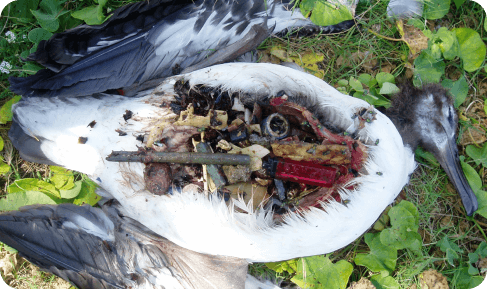
The Biological Indicators of Ocean Plastic Pollution (BIOPs) program seeks to improve ocean health by advancing the field of plastic pollution research. This collaboration provides scientifically defensible justification for large-scale waste management and consumer behavior improvements. To this end, our research focuses on the accumulation and consequences of marine plastic debris in the pelagic food webs of the Pacific.
One approach of this program is to address the question “Is plastic increasing in the ocean?”. If global efforts by governments, NGOs, and individuals to reduce ocean waste starts working, the marine animals can tell us.
Legacy Species – Decadal Trends
Abundant seabird species are accidentally caught in fisheries, providing samples for multiple decade comparisons. Short-tailed Shearwaters, Northern Fulmars, and Albatrosses taken by longline fisheries are an example of our program’s legacy species.
Sentinel Species – Regional Bio-indicators
Species restricted to feeding close to their colonies can indicate local levels of plastic pollution Wedge-tailed Shearwaters nesting in Hawaii are an example of an indicator of pollution in the central Pacific – tracking studies show they forage for their chicks within 200km of the islands.
Partners and Funders:
HPU, NOAA Fisheries, Alaska Fisheries Science Center, Kure Atoll Conservancy, Myra Finkelstein, University of CA Santa Cruz, Marisla Foundation.
Related Species

Wedge-tailed Shearwater
Wedge-tailed Shearwater This oceanic seabird often feeds with tuna schools and serves as an important sign of ocean health in the warm waters of the...

Black-footed Albatross
Black-footed Albatross A charismatic ambassador for ocean stewardship, this species travels vast distances to forage and encounters many threats...

Pink-footed Shearwater
Pink-footed Shearwater A remarkable seabird that travels thousands of kilometers across the Pacific Ocean, returning to just three Chilean islands...
Related Projects

Student scientists – plastic in albatross diet
Student scientists - plastic in albatross dietOcean pollution continues to be a global problem for ecosystems and humankind. The Student Scientist...
Plastic in the food webs: tunas and emerging species
Plastic in the food webs: tunas and emerging speciesOikonos initiated the Biological Indicators of Ocean Plastic Pollution (BIOPs) Network to study...
Wedge-tailed Shearwater
Wedge-tailed Shearwater This oceanic seabird often feeds with tuna schools and serves as an important sign of ocean health in the warm waters of the...