
Habitat restoration
Healthy plants and stable soil support healthy breeding birds and island ecosystems. Oikonos partners with restoration experts to improve the habitats that vulnerable birds rely on to raise their young. Invasive plant removal and native plant propagation encourage the success of birds that have adapted to rely on endemic forests. Seabirds that dig nests in underground burrows need stable soil to raise their chick safely without their burrow collapsing or eroding. We have identified and implemented innovative tools to address unique habitat restoration needs at some of the most remote places in the world.
Año Nuevo Island:
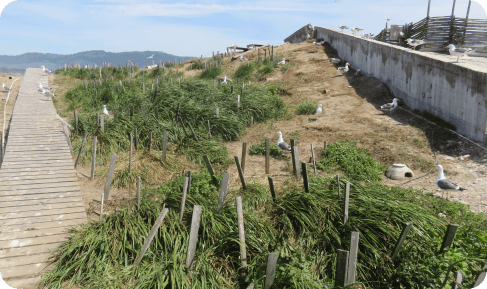
The terraces of Año Nuevo Island were once dominated by native coastal scrub vegetation. However, after a century of use as an inhabited lighthouse station, plants were entirely denuded by introduced rabbits and drought. The denuded soil is prone to erosion, reducing safe burrowing and nesting habitat and creating areas at high risk of trampling by other animals that live on the island. Oikonos works with restoration experts to design healthy seabird colony habitat that allows the vulnerable birds at ANI to thrive. Biodegradable erosion control fabric now carpets the ground, stopping erosion and building soil to provide stable burrow walls and roofs for auklet nests. Raised boardwalks and platforms are also used to protect sensitive nesting areas from the weight of roosting pelicans and researchers. Since these efforts began, we’ve seen auklet burrow erosion rates decline from ~50% to ~5% annually.
Juan Fernández:
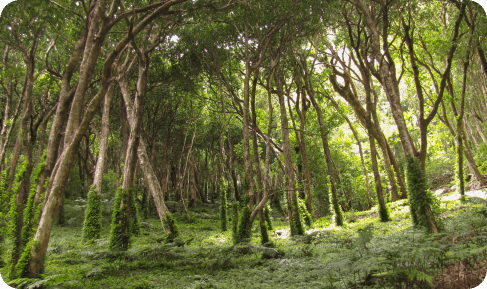
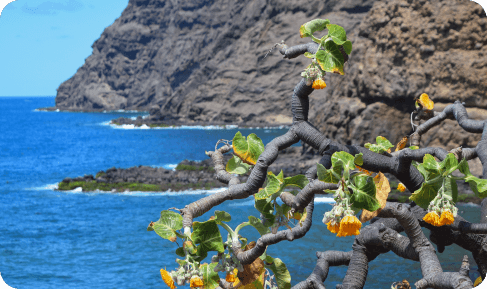
The Juan Fernández Islands’ forest comprises endemic plants that serve as a habitat for the critically endangered Juan Fernández Firecrown. For the conservation of the Firecrown and the near-threatened Juan Fernández Tit-tyrant, it is crucial to control invasive plants and maintain native forest. On Robinson Crusoe Island, we have restored plots of this valueable habitat by removing harmful invasive plants and encouraging the growth of endangered and endemic trees. Since 2001, Oikonos has initiated and led ecological and conservation research, community-based conservation, education and capacity building programs in the Juan Fernandez islands. Scaling and sustaining these efforts is necessary to safeguard the archipelago’s biodiversity, which heavily relies on the safeguarding of its unique forests.
Partners and Funders:
Silvia Ziller/Horus Institute, Island Conservation, CONAF in the Juan Fernandez Islands, and funded by Mohamed Bin Zayed and Fondation Franklinia. Go Native and Ano Nuevo State Park in California with funding from California Fish and Wildlife, Honda Marine Foundation, and the Luckenbach Oil Spill Trustee Council.
Related Species

Cassin’s Auklet
Cassin’s Auklet Experts at diving for small krill and larval fish, these seabirds are vulnerable to changes in ocean temperature and...

Masafuera Rayadito
Masafuera Rayadito It is a poorly known and critically endangered landbird unique to only one island in the worldNatural history Endemic to the...

Juan Fernández Firecrown
Juan Fernández Firecrown Endemic to Robinson Crusoe Island and on the verge of extinction.Natural history Only inhabits the native forest of...
Related Projects

Light pollution
Every year thousands of seabirds around the world are impacted by light pollution causing their death or injuring them. This problem prompted...
Conservation fences
Conservation fencesBreeding seabirds face competition and predation at increasingly disturbed island habitats. Human-introduced species such as...

Innovative nests
Innovative nests As climate change and human development degrade the quality and availability of breeding bird habitat, safe nesting sites for...