
An activity carried out in the Rabanal and Piedra Agujereada sector, invited the young people of Juan Fernández to get to know and protect their own ecosystem.
Environmental education and interpretation are both learning processes that seek to transmit knowledge about the protection of our environment, to generate habits and behaviors that will be incorporated into people’s daily lives. In addition, it seeks to raise awareness of the problems in our locality, country, and planet, and to incorporate values and tools that can help prevent and solve them.
So, what is the benefit of doing this outdoors? When you are in contact with nature and witness firsthand what is happening in the ecosystem you inhabit, the learning process accelerates and empathy levels towards other species increase.
To delve into these issues and better understand environmental problems, as well as investigate the search for solutions, the local Oikonos team, supported by the staff of the Juan Fernández Archipelago National Park, carried out a field activity focused on the youth from the Robinson Crusoe community.
The activity carried out in the forests of the Rabanal sector and in the colony of Pink-footed Shearwaters of Piedra Agujereada, had the participation of the local community, which connected with the environmental problems of this area of the island and learned about the different initiatives that are in place to recover threatened species and ecosystems.
One of these initiatives is the construction of a new fence to ensure the protection of one of the most important reproductive colonies of Pink-footed Shearwater (Ardenna creatopus) on this island of Chile. Those who participated in the activity had the opportunity to monitor the growth of the chicks inside the nesting caves.
Related Blogs
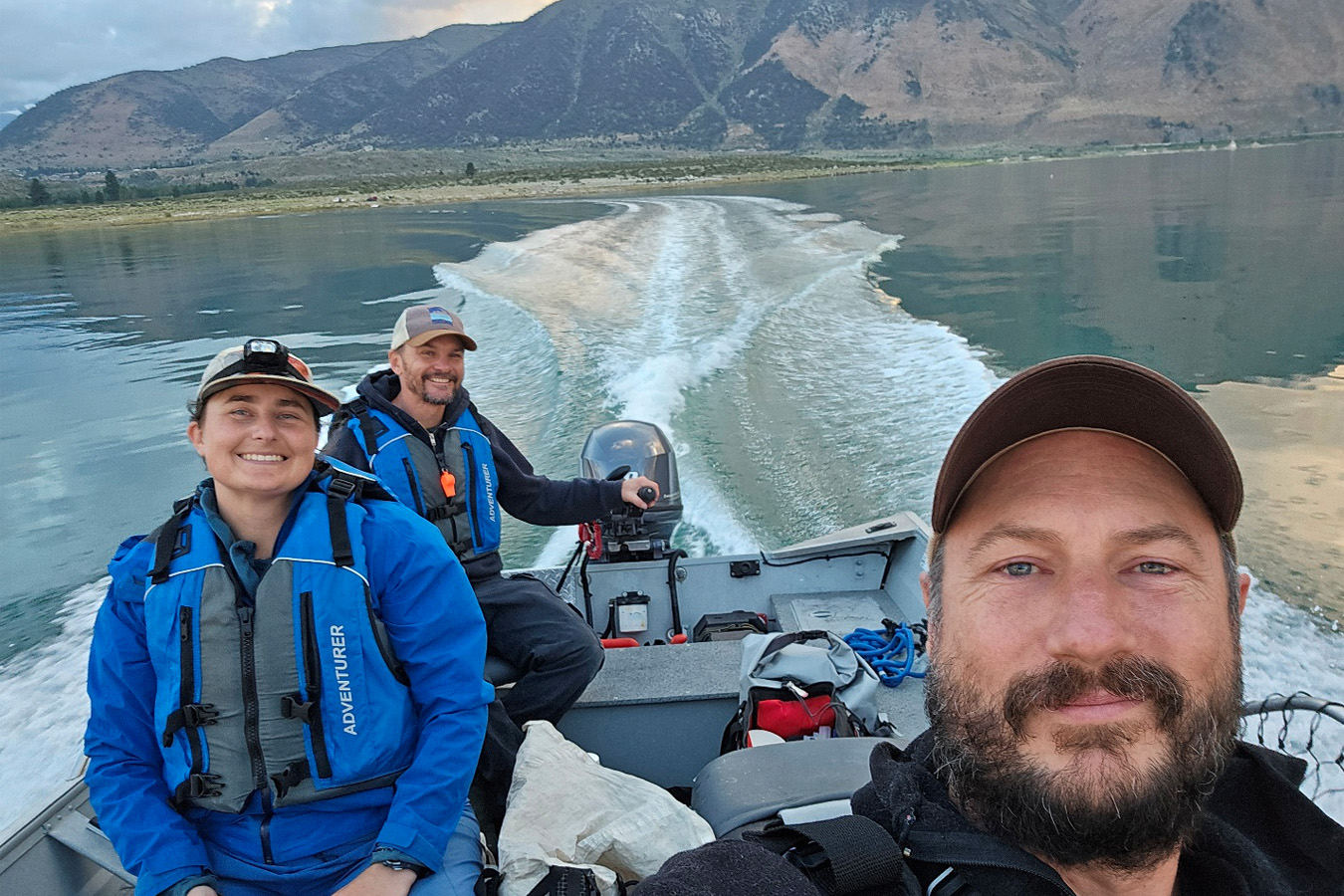
Phalarope Tagging at Mono Lake: An Update from Science Director Ryan Carle
In 2025, Oikonos launched the project “Promoting the Conservation of the Humboldt Penguin in Chile and Peru”, an initiative aimed at strengthening scientific research, environmental education, and conservation efforts for one of the most iconic species of the Humboldt Current.

The collaboration of those who work at sea every day can make a big difference in conservation: An interview with Simón Zepeda
In 2025, Oikonos launched the project “Promoting the Conservation of the Humboldt Penguin in Chile and Peru”, an initiative aimed at strengthening scientific research, environmental education, and conservation efforts for one of the most iconic species of the Humboldt Current.

Individual Actions Matter: The Humboldt Penguin Is Now a Natural Monument
Individual actions have a greater impact on the collective than we often realize. Thanks to more than 9,000 people who took part in the public consultation, the Humboldt Penguin has now been declared a Natural Monument.