
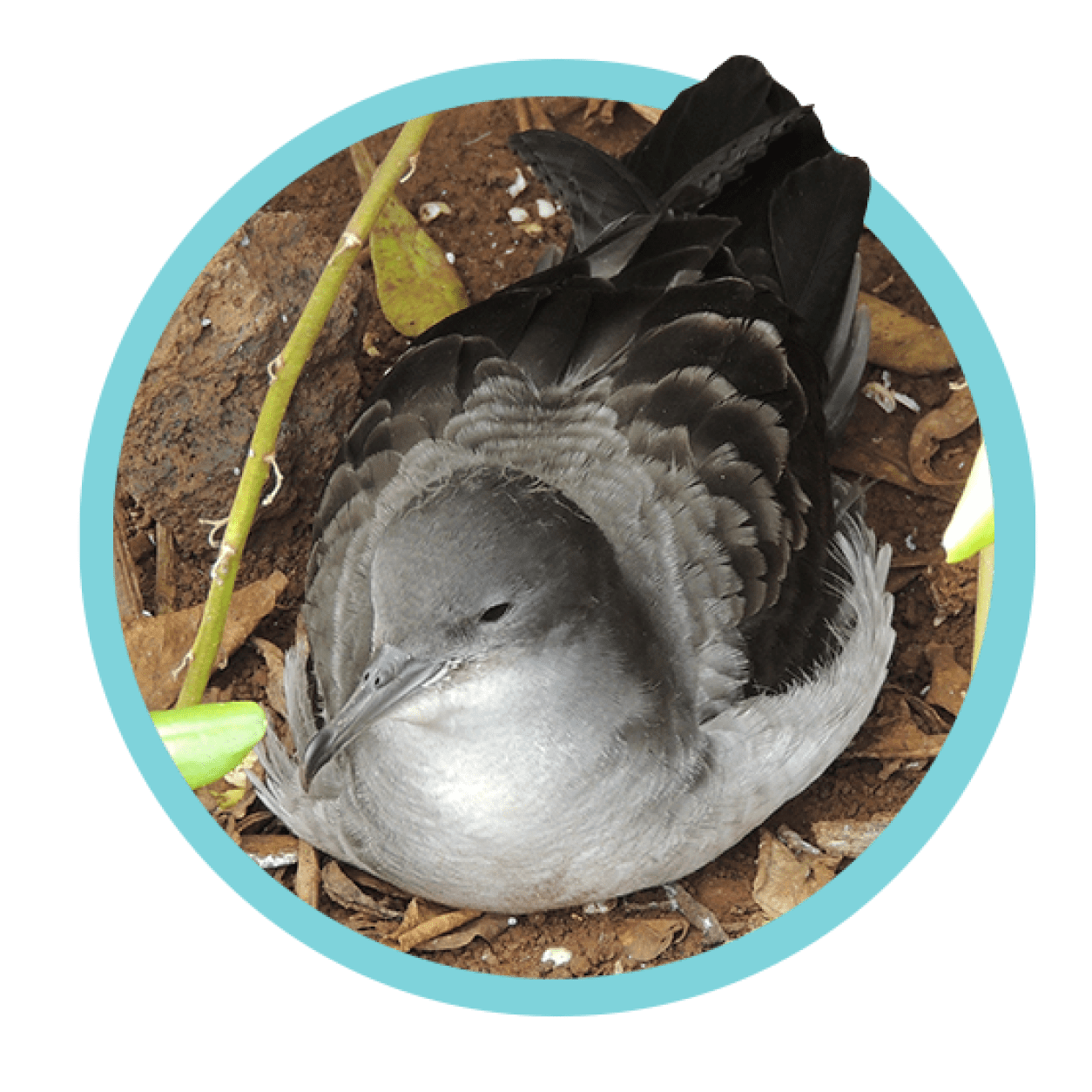
Conservation
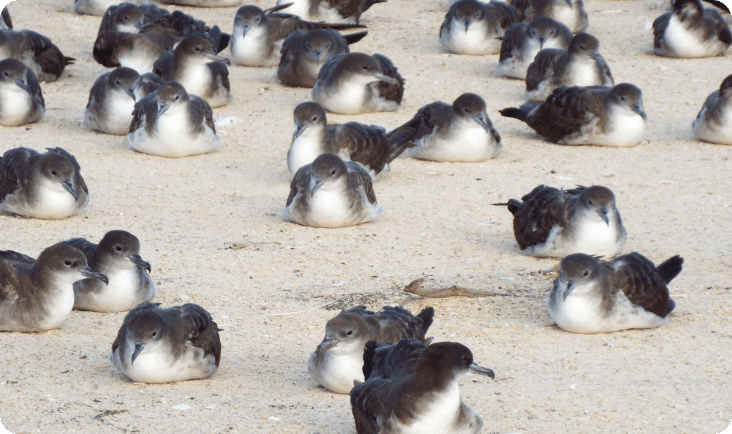
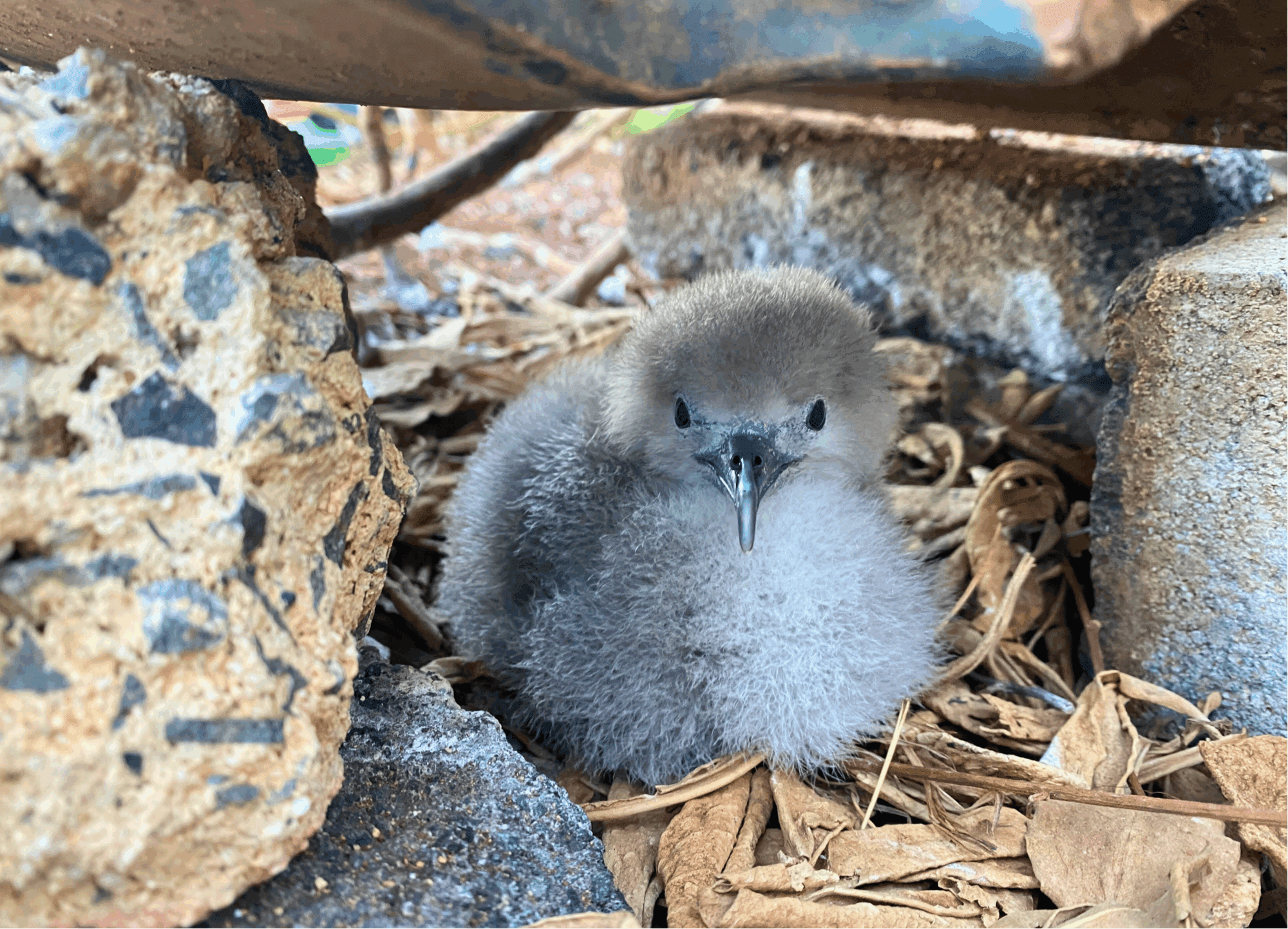
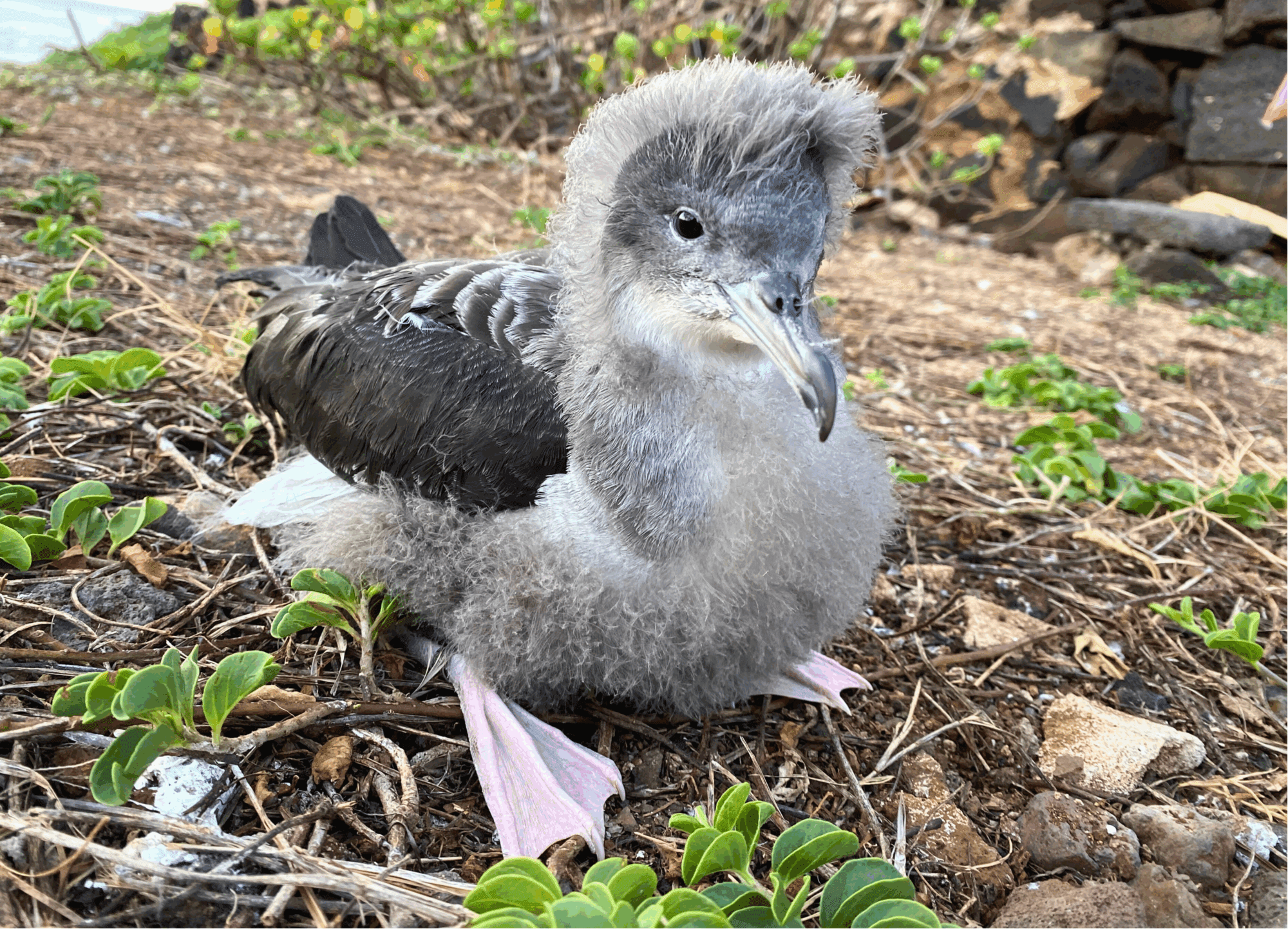
Oikonos is dedicated to the survival and stewardship of Wedge-tailed Shearwaters, known in Hawai‘i as ‘ua‘u kani (the moaning petrel). In partnership with the Hawai‘i Audubon Society, we helped transform a vacant lot in Honolulu into the Freeman Seabird Preserve—a thriving urban breeding colony for shearwaters that continues to grow each year.
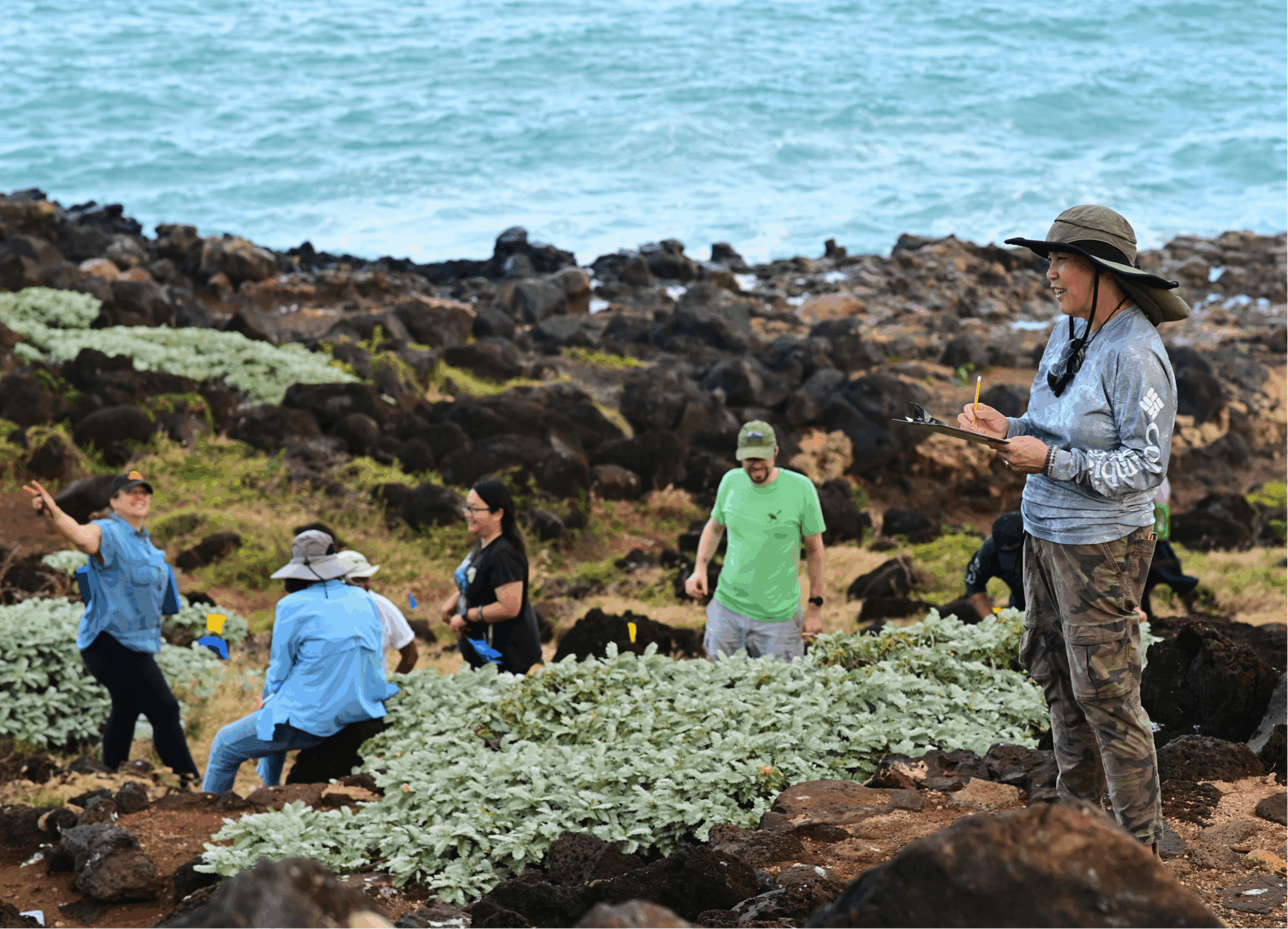
Working with Hawai‘i Pacific University, since 2009 we have documented nesting success at this growing ‘ua‘u kani colony and the impact of plastic pollution on chicks, shedding light on a global conservation issue.
To support the seabirds, we collaborated with artists from California College of the Arts and Windward Community College to design durable ceramic nests with cool sun shields and ventilation—safe homes for shearwaters that will last over 50 years.
Through our free Way of the Wedgie curriculum for middle and high school students, learners engage with STEM and Art by exploring the lives of urban shearwaters in Honolulu, making science relevant and place-based.
At sea, where shearwaters spend most of their lives, we use small trackers to follow their migrations and study their diet. We’ve discovered that while they stay within 200 miles to feed their chicks, after breeding, they travel thousands of miles across the Pacific—offering vital insights into their lives and the threats they face.
About the species
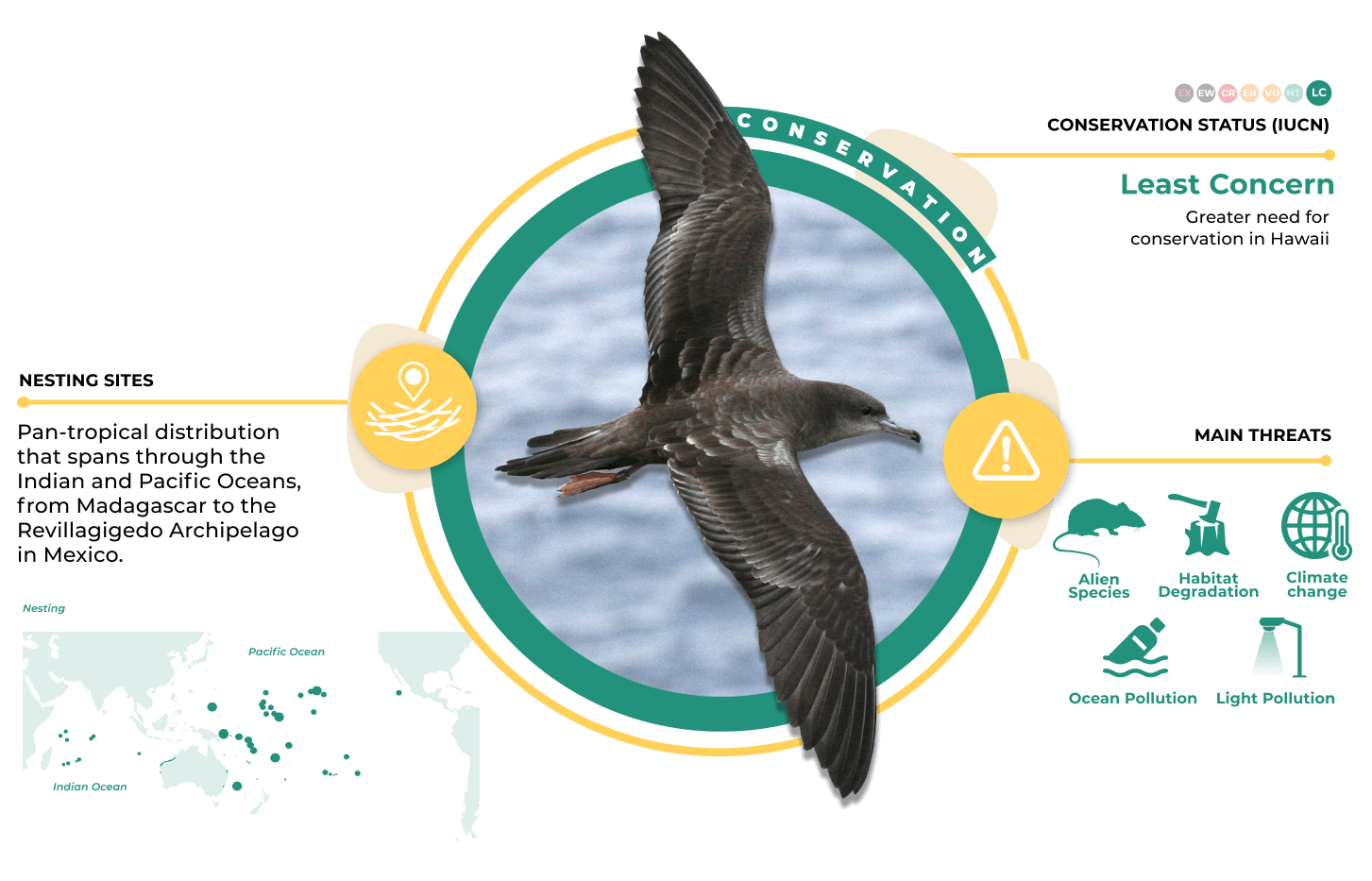
‘Ua‘u kani have long, narrow wings that are shorter than those of their albatross cousins, but well suited for shallow dives underwater and for digging burrows underground. Their range extends from the Indian Ocean, across the central Pacific, and to the coasts of Mexico, restricted to warm subtropical and tropical latitudes for breeding. These shearwaters travel thousands of kilometers in the non-breeding season and forage with tunas and marine mammals for greater success in finding prey.
Humans have made survival increasingly difficult for ‘ua‘u kani. Predation by cats and dogs threatens both adults and chicks, while rats and mongoose prey on chicks and consume unhatched eggs. Coastal development has destroyed many of their traditional breeding colonies. At sea, adult ‘ua‘u kani often mistake plastic for food and accidentally feed it to their chicks. Meanwhile, young birds heading to sea for the first time can become disoriented by streetlights, leading them to crash-land and become vulnerable to predators or vehicle strikes.
Yet, perhaps the most remarkable trait of the ‘ua‘u kani is their resilience. Despite facing numerous human-related threats both offshore and along Hawai‘i’s coasts, they remain one of the most abundant native bird species on the main Hawaiian Islands.
Other species

Humboldt Penguin
Humboldt Penguin Endemic species of the Humboldt Current, an extraordinarily productive marine ecosystem.Conservation In the 19th century, hundreds...

Tufted Puffin
Tufted Puffin An iconic species of the North Pacific, the Tufted Puffin has been declining for several decades throughout much of its...

Wilson’s Phalarope
Wilson’s Phalarope A small and charming migratory shorebird that specializes on saline lake habitats, the Wilson’s phalarope is threatened with...

Cassin’s Auklet
Cassin’s Auklet Experts at diving for small krill and larval fish, these seabirds are vulnerable to changes in ocean temperature and...

Masafuera Rayadito
Masafuera Rayadito It is a poorly known and critically endangered landbird unique to only one island in the worldNatural history Endemic to the...

Juan Fernández Firecrown
Juan Fernández Firecrown Endemic to Robinson Crusoe Island and on the verge of extinction.Natural history Only inhabits the native forest of...

Black-footed Albatross
Black-footed Albatross A charismatic ambassador for ocean stewardship, this species travels vast distances to forage and encounters many threats...