
Hawaii: Pelagicos lab at Oceanic Institute
Focused at Hawai‘i Pacific University’s Pelagicos Lab, Oikonos coordinates a research and education partnership to study and conserve Hawaiian wildlife and their habitats, on land and at sea.
History
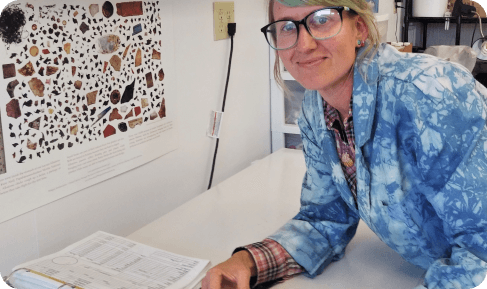
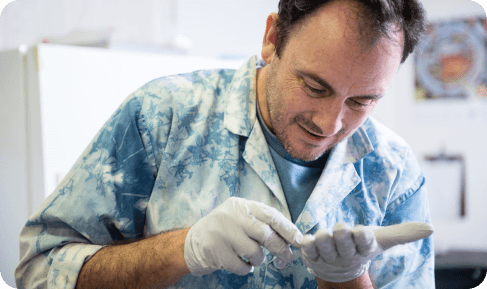
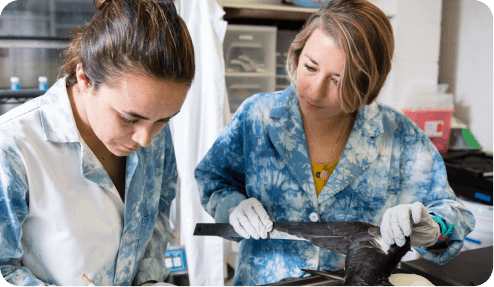
Dr. David Hyrenbach’s Pelagicos Lab at HPU is the Hawaii headquarters of Oikonos’ BIOPs program, studying ocean wildlife as biological samplers of marine plastic pollution. In addition, we collaborate on food web investigations including diet of seabirds and tunas in the subtropical Pacific. Oikonos staff mentor graduate and undergraduate students engaged in applied research.
Context
Our impact is significantly amplified through our partnership with HPU. We have access to laboratory facilities, equipment, and contributions from early career graduate students. The students and Dr. Hyrenbach contribute to Oikonos’ mission of developing science-informed approaches to marine conservation.
Indigenous land acknowledgement
We acknowledge Hawaiʻi as an indigenous space where the descendants are kānaka ʻōiwi or Native Hawaiian. The laboratories located at Oceanic Institute are in the Ahupuaʻa (watershed) of Waimanalo.
Other Initiatives

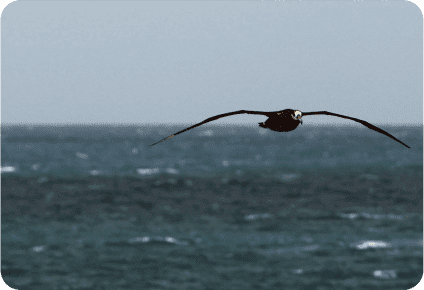
Student scientists – plastic in albatross diet
Student scientists - plastic in albatross dietOcean pollution continues to be a global problem for ecosystems and humankind. The Student Scientist...
Plastic in the food webs: tunas and emerging species
Plastic in the food webs: tunas and emerging speciesOikonos initiated the Biological Indicators of Ocean Plastic Pollution (BIOPs) Network to study...
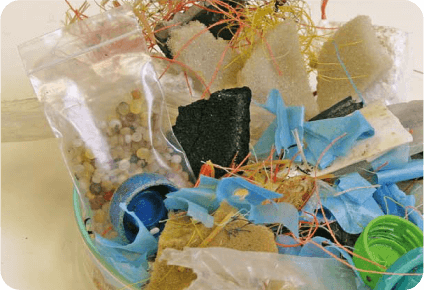
Tracking Marine Plastic Pollution: Is it increasing?
Tracking Marine Plastic Pollution: Is it increasing?The Biological Indicators of Ocean Plastic Pollution (BIOPs) program seeks to improve ocean...

Pelagicos lab at Oceanic Institute
Focused at Hawai‘i Pacific University’s Pelagicos Lab, Oikonos coordinates a research and education partnership to study and conserve Hawaiian wildlife and their habitats, on land and at sea.
Other Species

Humboldt Penguin
Humboldt Penguin Endemic species of the Humboldt Current, an extraordinarily productive marine ecosystem.Conservation In the 19th century, hundreds...

Wedge-tailed Shearwater
Wedge-tailed Shearwater This oceanic seabird often feeds with tuna schools and serves as an important sign of ocean health in the warm waters of the...

Tufted Puffin
Tufted Puffin An iconic species of the North Pacific, the Tufted Puffin has been declining for several decades throughout much of its...

Wilson’s Phalarope
Wilson’s Phalarope A small and charming migratory shorebird that specializes on saline lake habitats, the Wilson’s phalarope is threatened with...

Cassin’s Auklet
Cassin’s Auklet Experts at diving for small krill and larval fish, these seabirds are vulnerable to changes in ocean temperature and...

Rhinoceros Auklet
Rhinoceros Auklet Long-lived ecosystem engineers and indicators of marine and island health.Natural history A close relative of puffins, the...

Masafuera Rayadito
Masafuera Rayadito It is a poorly known and critically endangered landbird unique to only one island in the worldNatural history Endemic to the...

Juan Fernández Firecrown
Juan Fernández Firecrown Endemic to Robinson Crusoe Island and on the verge of extinction.Natural history Only inhabits the native forest of...

Black-footed Albatross
Black-footed Albatross A charismatic ambassador for ocean stewardship, this species travels vast distances to forage and encounters many threats...

Pink-footed Shearwater
Pink-footed Shearwater A remarkable seabird that travels thousands of kilometers across the Pacific Ocean, returning to just three Chilean islands...