
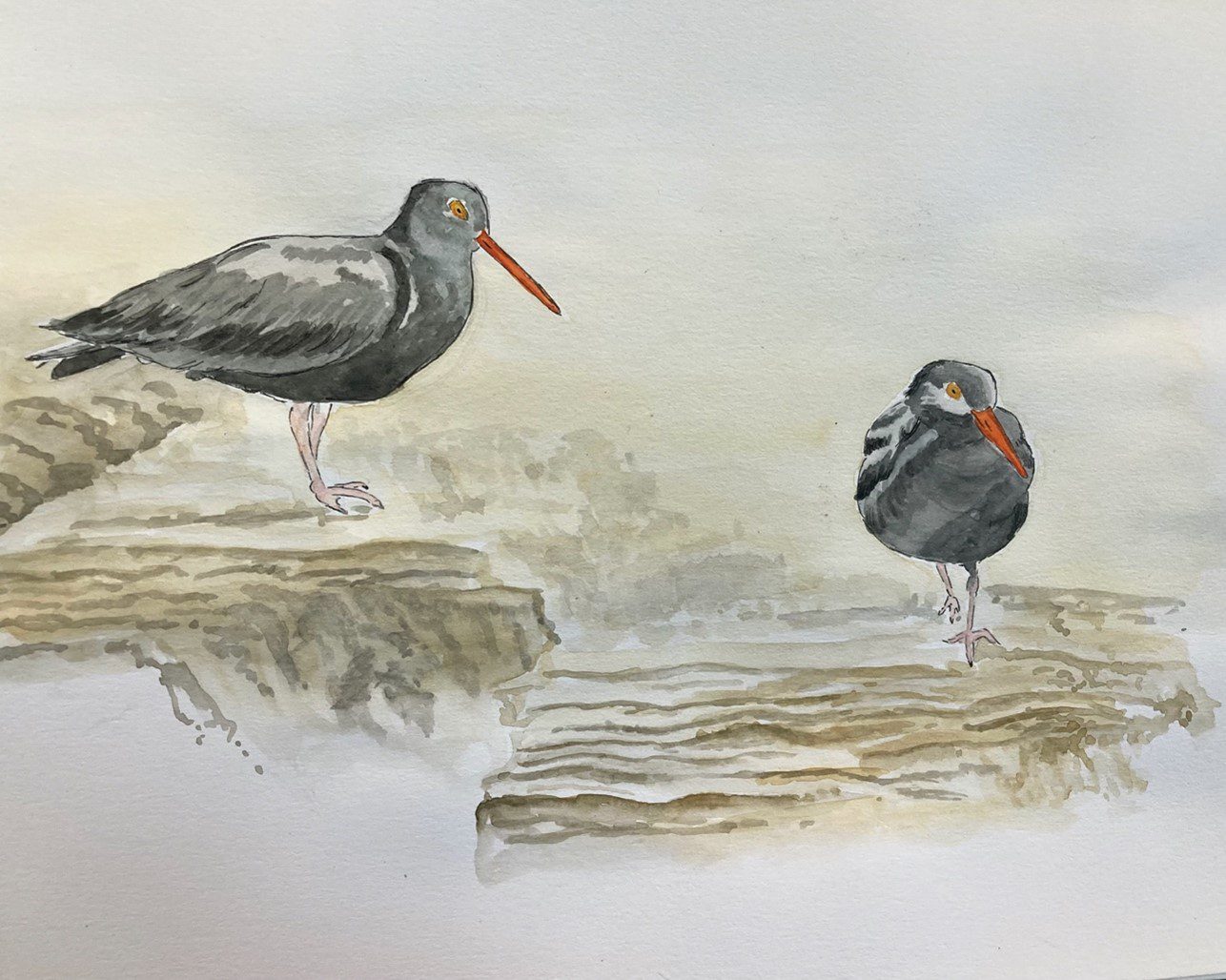
Black Oystercatchers by Lizzie
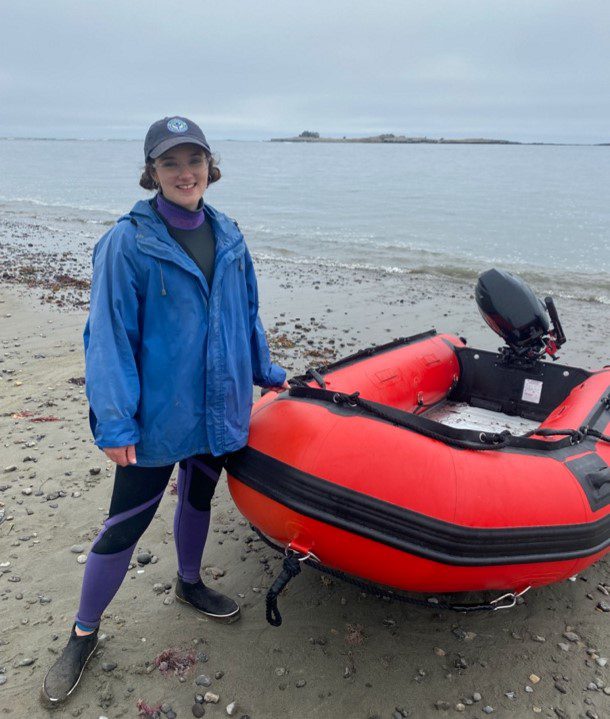
Lizzie was part of four artists that spent a few days completely immersed in the world of Año Nuevo Island alongside the Oikonos’ team, with one goal in mind: to use their artistic skills to portray the life of the island through their work.
Her work, alongside other artists’, will be showcased at the art exhibition “The Winged Sentinels of Monterey Bay” at the Seymour Marine Discovery Center on July 7th.
But first…what is scientific illustration?
Scientific illustration is the creation of visual representations of scientific subjects, such as flora, fauna, anatomical structures, or geological formations. These illustrations are precise, accurate, and often include technical details. The goal of scientific illustration is to visually communicate scientific information to a broad audience, including scientists, students, and the general public. Scientific illustrators use a variety of techniques, including pen-and-ink, watercolor, digital media, and 3D modeling, to create their illustrations.
Fun fact: Even in a world full of photography, illustrations are still important, as they can be better at revealing the structure of a subject, and they can work to fill in the gaps and render the subjects more clearly in isolation while selecting the necessary elements and eliminating anything unwanted.
Why is art important in the science world?
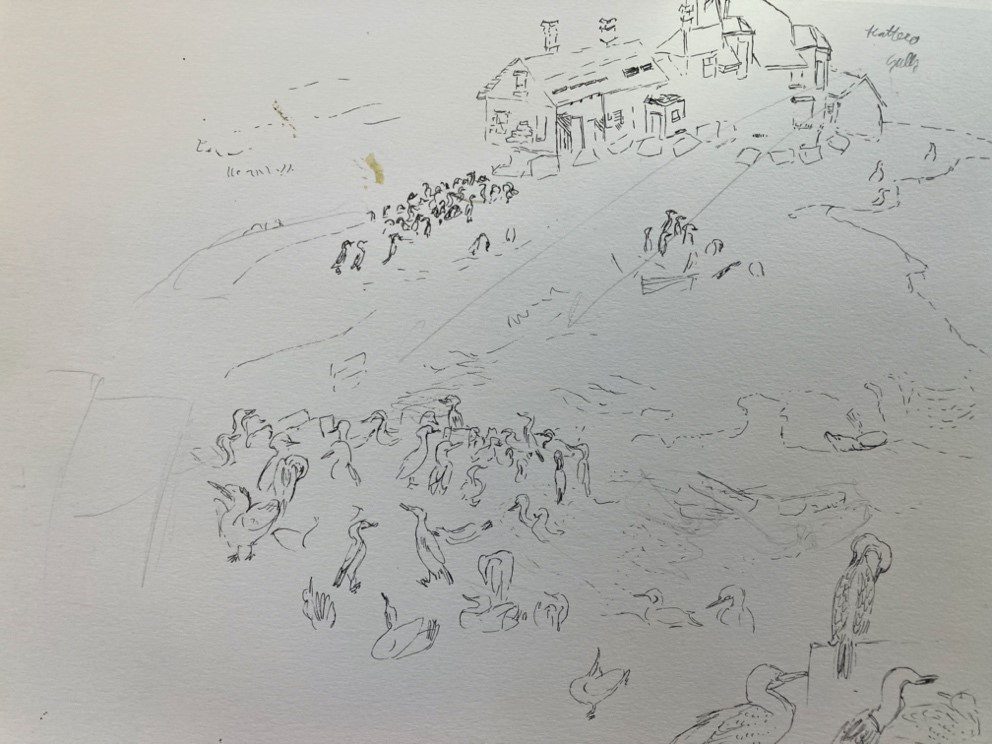
Illustration by Lizzie
Scientific illustration serves as an essential tool for conveying complex scientific concepts and data to a diverse audience. These illustrations play a significant role in enhancing the understanding and comprehension of scientific subjects, enabling scientists to communicate their findings, and allowing the general public to access and appreciate research in a more digestible format. Scientific illustrations can also pave the way for groundbreaking discoveries by bringing to light previously undiscovered phenomena and helping researchers analyze and synthesize their data more effectively. Overall, scientific illustration is a crucial aspect of science communication that allows the broader community to engage with and appreciate scientific research, and it plays an essential role in advancing scientific knowledge and understanding.
In summary, artwork can take a very complicated subject and turn it into something easy to understand!
Lizzie
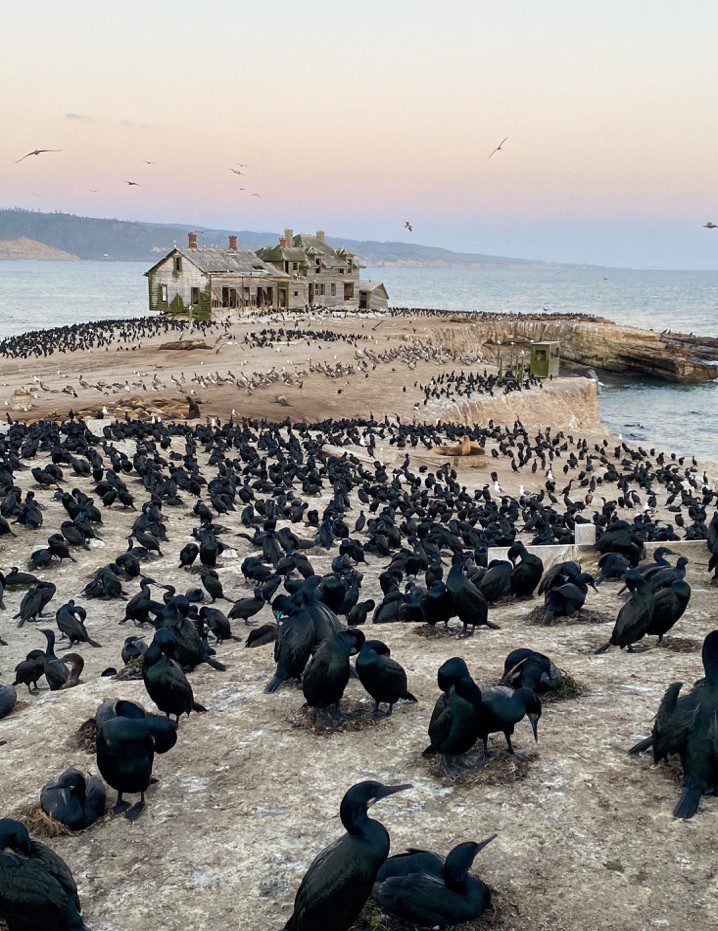
Photo by Danielle Devincenzi
“Even though I knew that Año Nuevo would be covered with seabirds, it was hard to imagine before getting there just what that would look like. The density of wildlife was unlike pretty much anything else I had ever seen. Seals and sea lions were piled on the beach and outer terraces, but on most of the island it was birds everywhere- flying, squawking, mating, nesting, roosting, fighting. Any space that wasn’t occupied by seabirds had been trampled bare of any plant life, and the smell of guano was everywhere. The more I looked, the more questions I had about each species’ behaviors, distributions on the island, and life histories when they leave the island. I felt inspired and giddy walking around, sketching as fast as I could. I was especially fascinated with the Brandt’s cormorants because of their breeding behaviors. When a mate returned to a nest with nesting material, the pair would circle and sway their necks, and nibble at each other’s mouths together in a dance. Eventually, they would place it together. It reminded me of dancing and cuddling, and I couldn’t help but think of it as loving.” -Lizzie
What led you to do art for conservation/science purposes?
“Drawing is a way for me to appreciate nature more deeply, through looking closer at the physical forms and noticing things about a plant, animal, landscape that would have escaped my attention otherwise. The first chance I got to explore this deeply was with UCSC’s Natural History Field Quarter, where I spent beautiful days outside in the UC reserves, learning the process of field journaling to record and reflect on the ecology around me. Since then, I’ve also done the natural history illustration class at UCSC and realized that art for conservation and scientific purposes is still very much alive and needed!”
How did you capture the island with your art?
“I hope I captured the island by recording the distribution and habitats of each species and how they relate to one another. This is something that was a lot of fun for me to watch, so a lot of my time on the island was spent making preliminary maps and nature notes!”
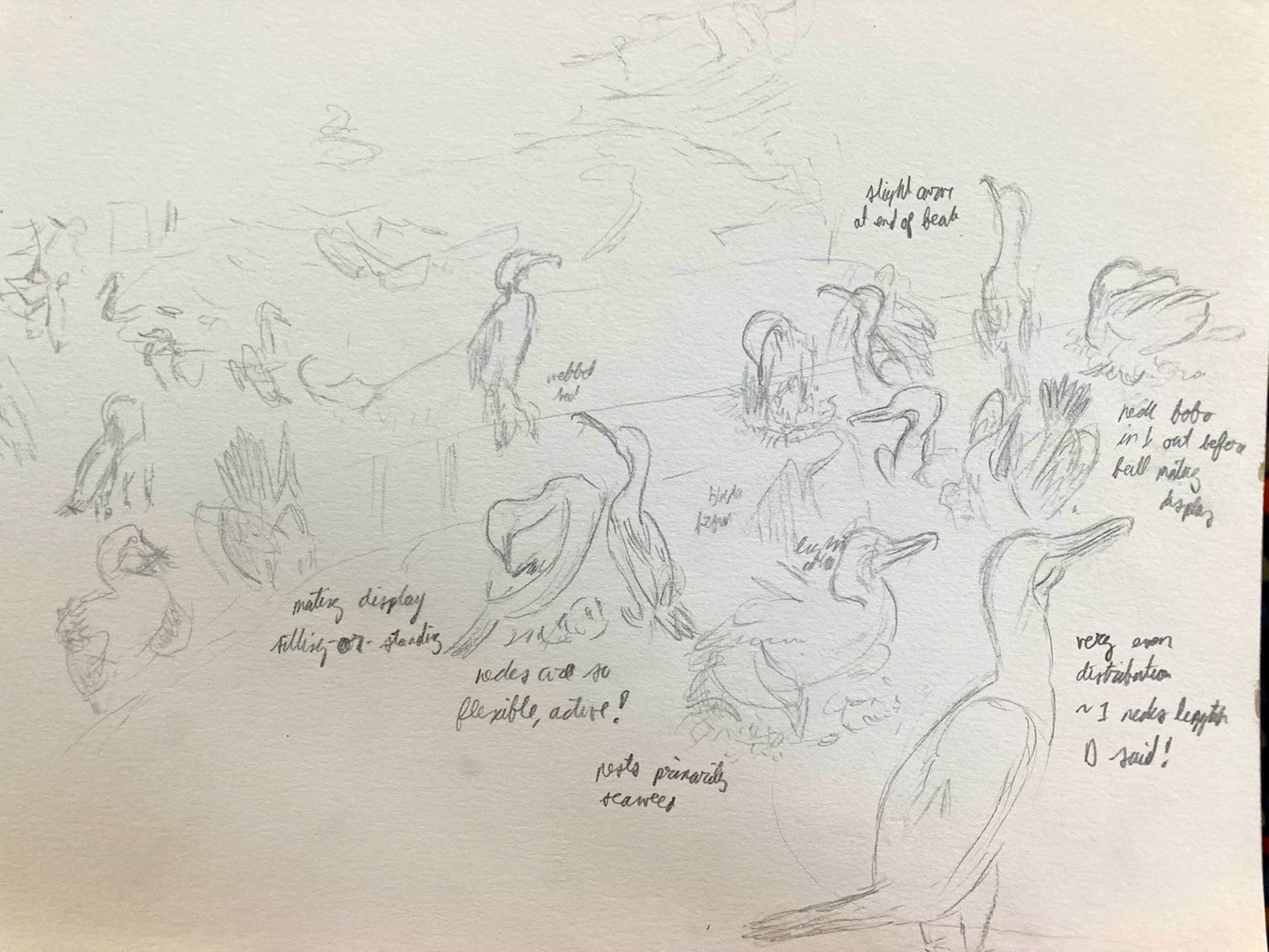
Initial sketch by Lizzie
How does your art relate to seabirds and their ecosystem?
“I absolutely love maps, and I’ve done other map-based illustration projects in the past, so my final works will relate to how each of them make the island theirs, in the nests and roosting places they set up and ways they defend their territory. Additionally, I spent a lot of time observing the Brandt’s cormorants and gulls’ behavior, so I also look forward to making works that chart those species’ habits of mating, breeding, or fighting.”
Which seabird made the biggest impression on you and why?
“I was fascinated with the Brandt’s cormorants because of their breeding behaviors. When one bird, I believe typically the male, would return to their nest with nesting materials they had gathered, the male and female would lean their necks together. Then, the pair would circle and sway their necks together in a dance, as the female tried to grasp the nesting material as well, and nibble at each other’s mouths. Eventually, they would place it together. It reminded me of dancing and cuddling and was so cool to see such beautiful and dynamic behavior!”
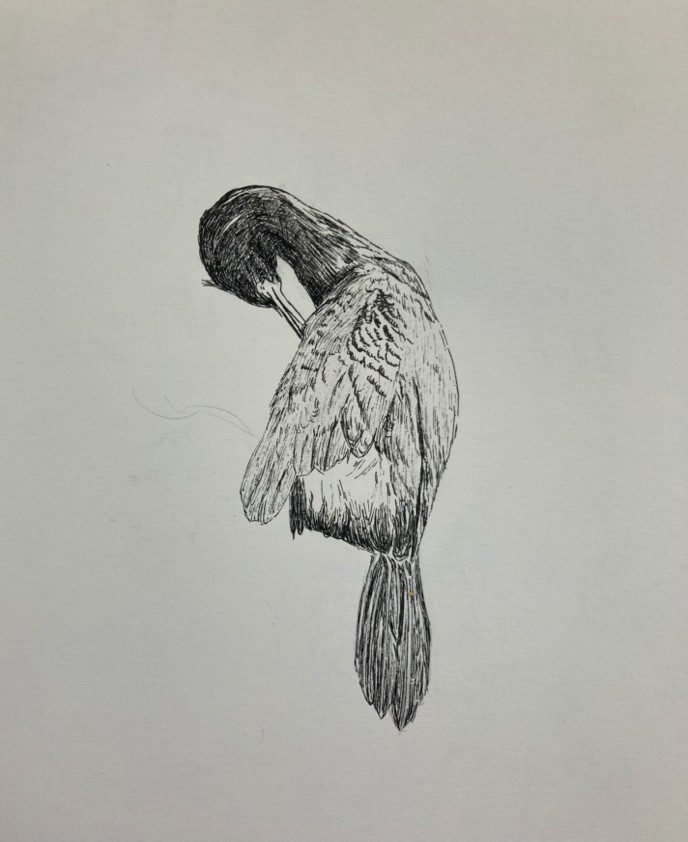
Cormorant sketch by Lizzie
Where can you find Lizzie’s work?
Find Lizzie on Instagram as @lizziedrawsworld, and on Facebook as Lizzie Schafer
See more of her work and other artists at “The Winged Sentinels of Monterey Bay”. There will be food, drinks, and contests! All ages are welcome. More information here.
June 1st, 2023
Related Blogs
Phalarope Tagging at Mono Lake: An Update from Science Director Ryan Carle
In 2025, Oikonos launched the project “Promoting the Conservation of the Humboldt Penguin in Chile and Peru”, an initiative aimed at strengthening scientific research, environmental education, and conservation efforts for one of the most iconic species of the Humboldt Current.

The collaboration of those who work at sea every day can make a big difference in conservation: An interview with Simón Zepeda
In 2025, Oikonos launched the project “Promoting the Conservation of the Humboldt Penguin in Chile and Peru”, an initiative aimed at strengthening scientific research, environmental education, and conservation efforts for one of the most iconic species of the Humboldt Current.

Individual Actions Matter: The Humboldt Penguin Is Now a Natural Monument
Individual actions have a greater impact on the collective than we often realize. Thanks to more than 9,000 people who took part in the public consultation, the Humboldt Penguin has now been declared a Natural Monument.