
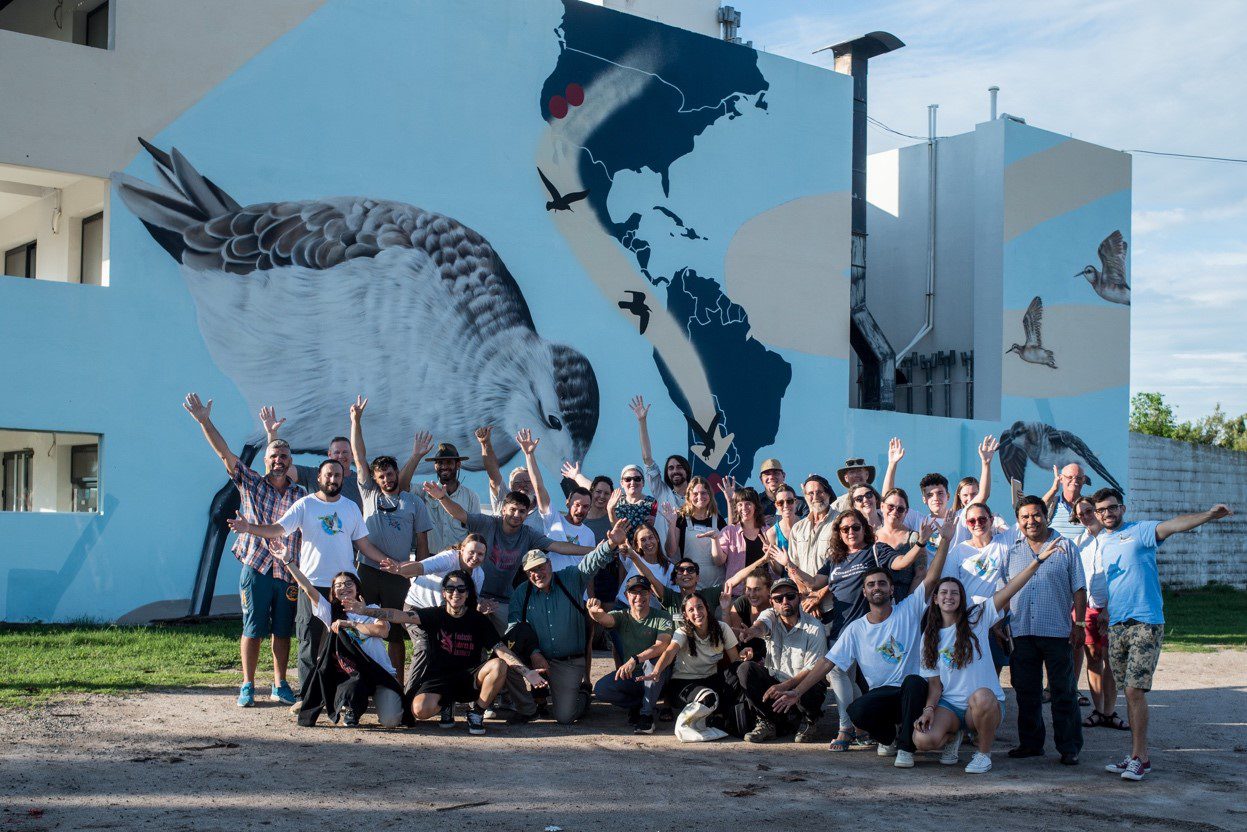
Attendees in front of the phalarope mural painted by Franco Cervato Cozza. Photo courtesy of Damián Maestri.
Phalaropes are small to medium-sized shorebirds best known for congregating in huge flocks. Their distinctive feeding technique involves spinning in circular motions on the water’s surface to stir up food. Renowned for their remarkable migratory journeys, phalaropes traverse extensive distances between their Arctic breeding grounds and temperate or tropical wintering areas. These migrations often span thousands of miles annually, showcasing their extraordinary endurance and adaptability.

Phalaropes at Mono Lake in California
In Ryan Carle’s (Oikonos’ Science Director) words, “If you have not yet met these little shorebirds, –they are fragile and strong, elegant and silly, ocean-going and desert-going, and altogether inspiring.”
Phalaropes warrant urgent conservation planning based on serious current threats to their habitat and declining population. They rely on increasingly threatened wetland and saline lake habitat in both their breeding and migratory ranges. Water diversion, climate change, and agricultural pollution threaten the health of these critical habitats and the birds that rely on them.
The meeting took place in Miramar, Argentina on the shores of Laguna Mar Chiquita– a salt lake and one of the largest non-breeding sites for Wilson’s Phalaropes in the world. The goal of this meeting was to bring together a community of scientists and naturalists from across the Western Hemisphere to collaborate on a common goal of understanding and conserving phalaropes. This year’s meeting had several objectives: to 1) facilitate an exchange of knowledge between researchers studying 3 different phalarope species, 2) pinpoint action items to support ongoing work in four key areas: research, monitoring, site management, and education, 3) use these action items to develop a 3 to 5-year plan of prioritized efforts.
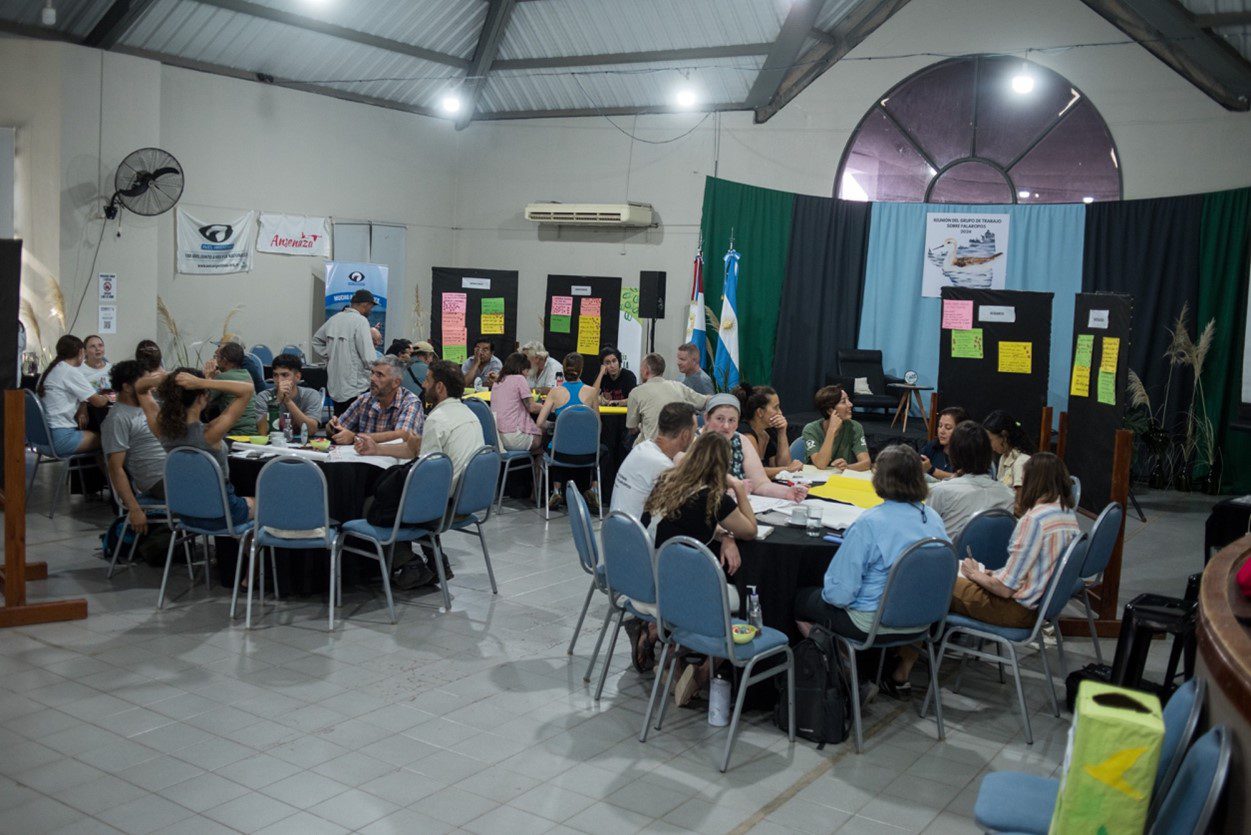
The International Phalarope Working Group meeting was filled with knowledge exchanged by all the conservationists who attended. Photo courtesy of Damián Maestri.
In the days following the meeting, a small group of field biologists stayed in Miramar for a phalarope trapping effort. We searched the shores of Laguna Mar Chiquita for phalaropes and set up our nets and equipment in promising spots. Though no phalaropes found their way into our nets, our attempts made tremendous progress on informing significant knowledge gaps in phalarope trapping methodologies. A similar team of biologists will further work towards closing this gap with continued trapping efforts at Chaplin and Mono Lake this summer.
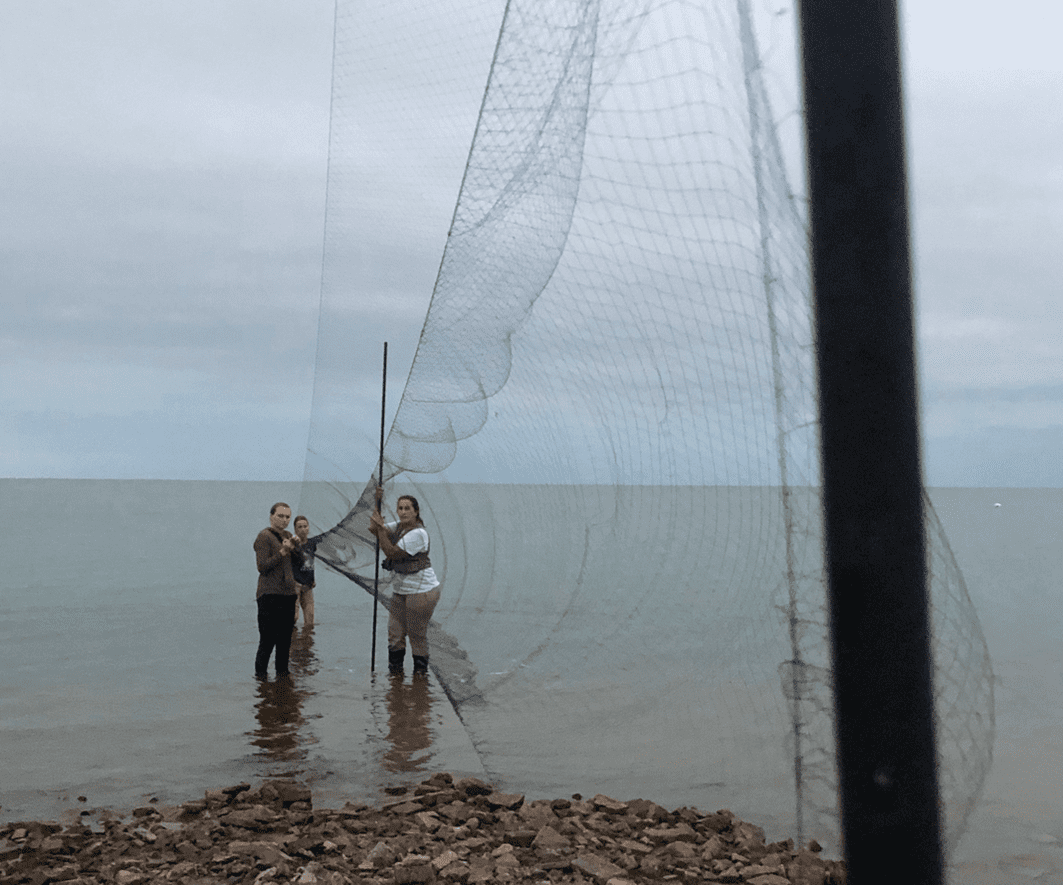
Phalarope trapping efforts at Laguna Mar Chiquita.
Phalaropes are special because they have underscored the incredible potential of human connectivity and collaborative efforts. In Miramar, a passionate flock of biologists came together to study and protect these remarkable birds, and in doing so, created something much larger than the sum of its parts: a cross-hemispheric network of people and ecosystems, working in tandem to support this planet and the life it sustains.
Written by Katie Smith & Gabriela Lamanna
04/02/2024