

From left to right: Annette Henry, NOAA Fisheries, Ryan Carle, Oikonos Ecosystem Knowledge, Shannon Fitzgerald, NOAA Fisheries (retired), Jessie Beck (formerly Oikonos), NOAA Fisheries, Lee Benaka, NOAA Fisheries, Patrick Lynch, NOAA Fisheries.
We are proud that our program with NOAA Fisheries studying seabirds accidentally caught in fisheries (called bycatch) has won the Presidential Migratory Bird Federal Stewardship Award! Congratulations to the leaders Jessie Beck and Shannon Fitzgerald, and all the partners and fishery observers who have made this 16-year program possible. The project aims to maximize the scientific value of marine birds killed incidentally in the U.S. Pacific Ocean fisheries. We learn about seabird diets, plastic ingestion, genetics, health, and other aspects of their lives.
“The NOAA Fisheries-Oikonos Seabird Project not only helps us understand the impacts of bycatch on seabirds, it connects managers and scientists across NOAA regions and partner organizations,” says Jessie Beck. “It helps us to build a broader, more comprehensive picture of cumulative threats and ecologies of migratory seabirds in the Pacific.”
Every year, the Council for the Conservation of Migratory Birds recognizes projects or initiatives led by federal agencies or done in collaboration with them that focus on conserving migratory birds.
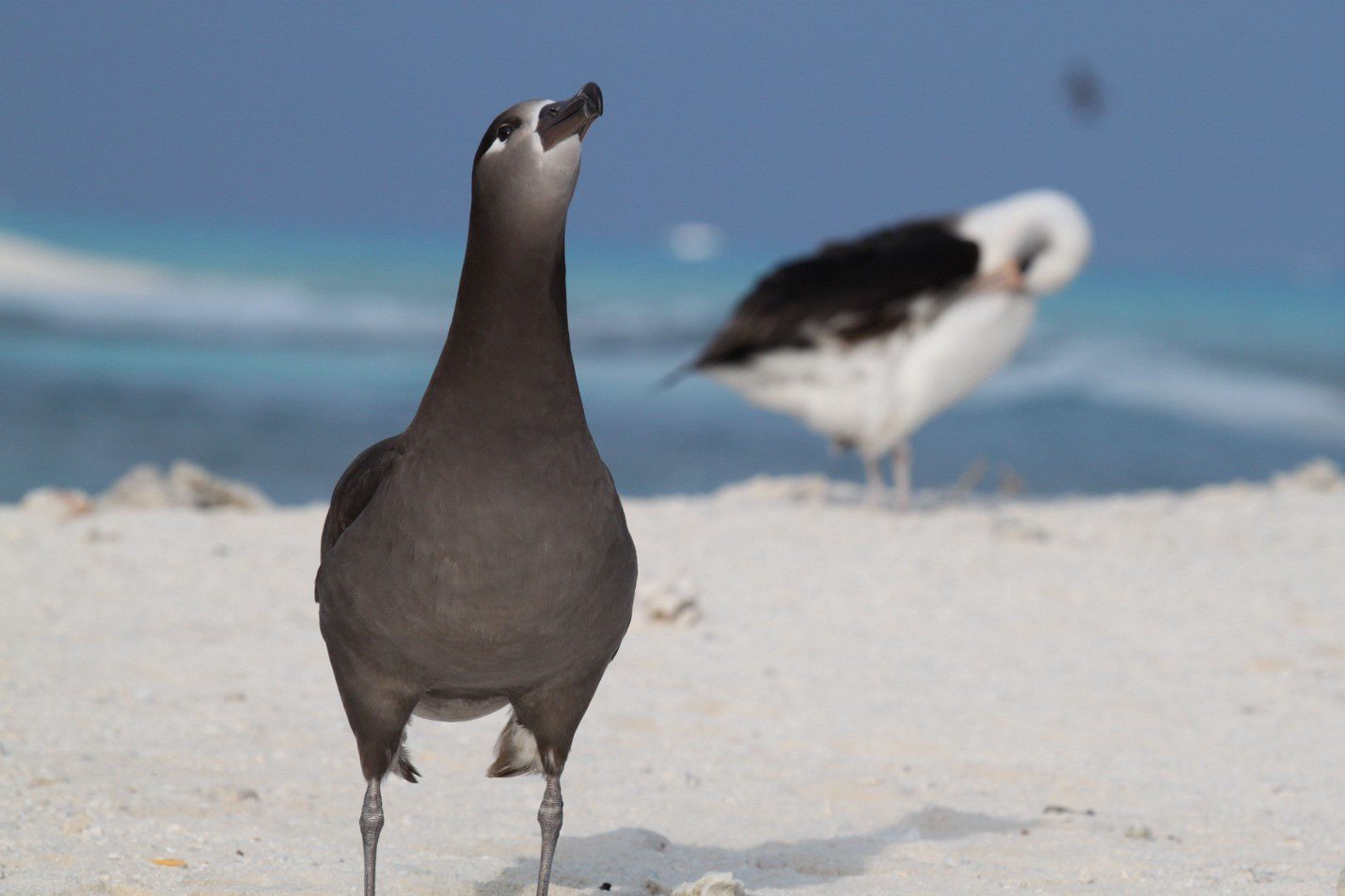
Black-footed Albatross are one of the focal species of the project. They travel vast distances to forage, making them susceptible to bycatch. Photo by Ilana Nimz.
Bycatch Matters
What is bycatch?
Fisheries play a crucial role as sources of employment, nutrition, and cultural significance for communities worldwide. However, their impacts on the marine environment extend well beyond the targeted species, affecting entire ecosystems. Non-target species like seabirds, marine mammals, turtles, and sharks can become unintentional casualties of fishing gear, a phenomenon known as fisheries bycatch. This issue poses a significant threat to seabird populations globally, alongside challenges such as invasive species and climate change.
A successful project due to teamwork!

Staff from NOAA Fisheries and Oikonos Ecosystem Knowledge attended the annual meeting of the Council for the Conservation of Migratory Birds on June 10, 2024. Pictured from left to right: Patrick Lynch, NOAA Fisheries; Ryan Carle, Oikonos Ecosystem Knowledge; Annette Henry, NOAA Fisheries; Lee Benaka, NOAA Fisheries; Shannon Fitzgerald, NOAA Fisheries (retired); Jessie Beck, NOAA Fisheries (formerly Oikonos); Benjamin Friedman, NOAA; Stephen D. Guertin, U.S. Fish and Wildlife Service.
The Seabird Bycatch Project owes its success to the unwavering dedication and leadership of Shannon Fitzgerald at NOAA’s Alaska Fisheries Science Center. Shannon is now retired, and we will continue his legacy with honor. Jessie Beck led this program at Oikonos for almost a decade and has now transitioned to a permanent position at NOAA Fisheries where Jessie will continue advancing seabird conservation efforts, including this bycatch program. Since 2005, Oikonos has been inspired to learn more about the impacts of seabird bycatch following the leadership of Hannah Nevins and Erica Donnelly-Green who initiated the Oikonos-NOAA partnership.
The program has meticulously examined over 4,000 seabirds, yielding invaluable insights into the lives of migratory birds and the challenges they encounter in the ocean.
NOAA’s Observer Programs coordinate the complex process of transferring seabird carcasses from fishing vessels to Oikonos biologists. This requires extensive personpower, logistics, freezer space, and the political will to monitor and assess impacts. The Pacific Islands, North Pacific, and West Coast Regional Programs deploy “certified observers” on U.S. longline and trawl vessels to gather data on fishing efforts, catches, and the incidental take of protected species like sea turtles, marine mammals, and seabirds. Fishery observers face physically and mentally challenging conditions, often spending weeks at sea in cramped, wet environments, with the added responsibility of collecting, storing, and shipping seabird carcasses.
The laboratory necropsy work was possible with support from the California Department of Fish and Wildlife’s Marine Wildlife Veterinary Care and Research Center (in Santa Cruz, CA) where we conducted all the examinations. Going forward, this work will continue at Hawai‘i Pacific University’s Pelagicos Lab in Waimanalo, Hawai‘i, led by Dr. David Hyrenbach (HPU Professor and Oikonos Research Associate).
Through the NOAA genetics lab in Auke Bay, new research led by Dr. Diana Baetscher, we have been able to assign the albatrosses and fulmars killed in U.S. fisheries to the colonies where they were born. Knowing the colony of origin of seabirds killed in bycatch incidents is crucial for several reasons:
Conservation Prioritization: Identifying the breeding site of an injured seabird at sea helps assess bycatch impact on specific populations, allowing for targeted conservation efforts and more effective resource allocation.
Understanding Population Impacts: Seabirds from different colonies may have different population dynamics, genetic diversity, and ecological roles. Bycatch data can reveal which populations are more heavily impacted, helping to assess the broader ecological consequences and potential long-term effects on the species.
Management and Mitigation Strategies: Identifying the colony of origin helps in designing targeted mitigation strategies. For example, if a particular colony is heavily impacted, specific measures can be implemented in areas where those seabirds are known to forage or travel.
Policy Development: Data on bycatch impacts by colony can inform policy and regulation decisions. Governments and international bodies can use this information to develop more effective laws and agreements aimed at reducing bycatch and protecting vulnerable seabird populations.
International Cooperation: As many seabirds migrate across borders, understanding colony-specific impacts fosters global collaboration on bycatch reduction and conservation efforts.
Why examine dead seabirds? Can they tell us something?
While the loss of every seabird is an unfortunate event, we can maximize their scientific value. We learn the age, maturity, health, sex, and what colonies they came from, giving us insight into the demographics of birds attracted to fishing vessels. All this information is essential to understand the population level impact of fisheries.
In addition, analyzing their stomach contents provides data on their diet and allows us to assess the accumulation of marine plastic in their digestive systems. This examination offers a broader perspective on the overall health of the ocean ecosystem.

Scientists sorting through plastics found in the stomachs of seabirds that were captured incidentally in fisheries.
There’s more to learn and do!

Northern Fulmars are one of the focal species of our seabird bycatch project. Photo by Peter Hodum.
Seabirds face urgent challenges in adapting to rapid climate change, compounded by their slow reproductive rates—most species typically lay only 1 to 2 eggs per year, hindering population recovery. Illegal, unreported, and unregulated (IUU) fishing remains a pervasive global issue that threatens ocean ecosystems. Additionally, the loss of nesting habitats due to sea level rise and the impact of introduced predators pose further threats to these majestic creatures.
While the United States has the best-managed fisheries globally, characterized by low bycatch rates, many fisheries worldwide still lack effective mitigation measures. Enhancing fishing methods and adjusting fishing timing are critical steps toward achieving sustainable practices that benefit both people and the ecosystem. Although measuring the impact of bycatch in vast oceans remains challenging, our recent advancements provide us hope! Tools like Global Fishing Watch, which uses satellite imagery to track vessel movements, along with AI technologies, present new opportunities to support the conservation of migratory seabirds.
In the face of escalating challenges, these advancements serve as a beacon of hope for safeguarding seabird populations and preserving the health of our oceans.
Learn more about Black-footed Albatross and Northern Fulmars!
Read NOAA’s recent article about the project here!
Ready to put your science glasses on? Here’s some scientific publications related to the NOAA Fisheries-Oikonos Seabird Project:
- Genetic assignment of fisheries bycatch reveals disproportionate mortality among Alaska Northern Fulmar breeding colonies
- Demographics of Black-footed Albatross Caught in the Hawaii Deep-Set Longline Fishery
- The factors influencing albatross interactions in the Hawaii longline fishery: towards identifying drivers and quantifying impacts.
- Global political responsibility for the conservation of albatrosses and large petrels.
- Across borders: External factors and prior behavior influence North Pacific albatross associations with fishing vessels.
- Seasonal variation of Pacific Northern Fulmar bycatch: Implications for age and sex-specific mortality.
Sept 18th, 2024
Written by: Michelle Hester and Gabriela Lamanna