
By Ryan Carle
September 16, 2026
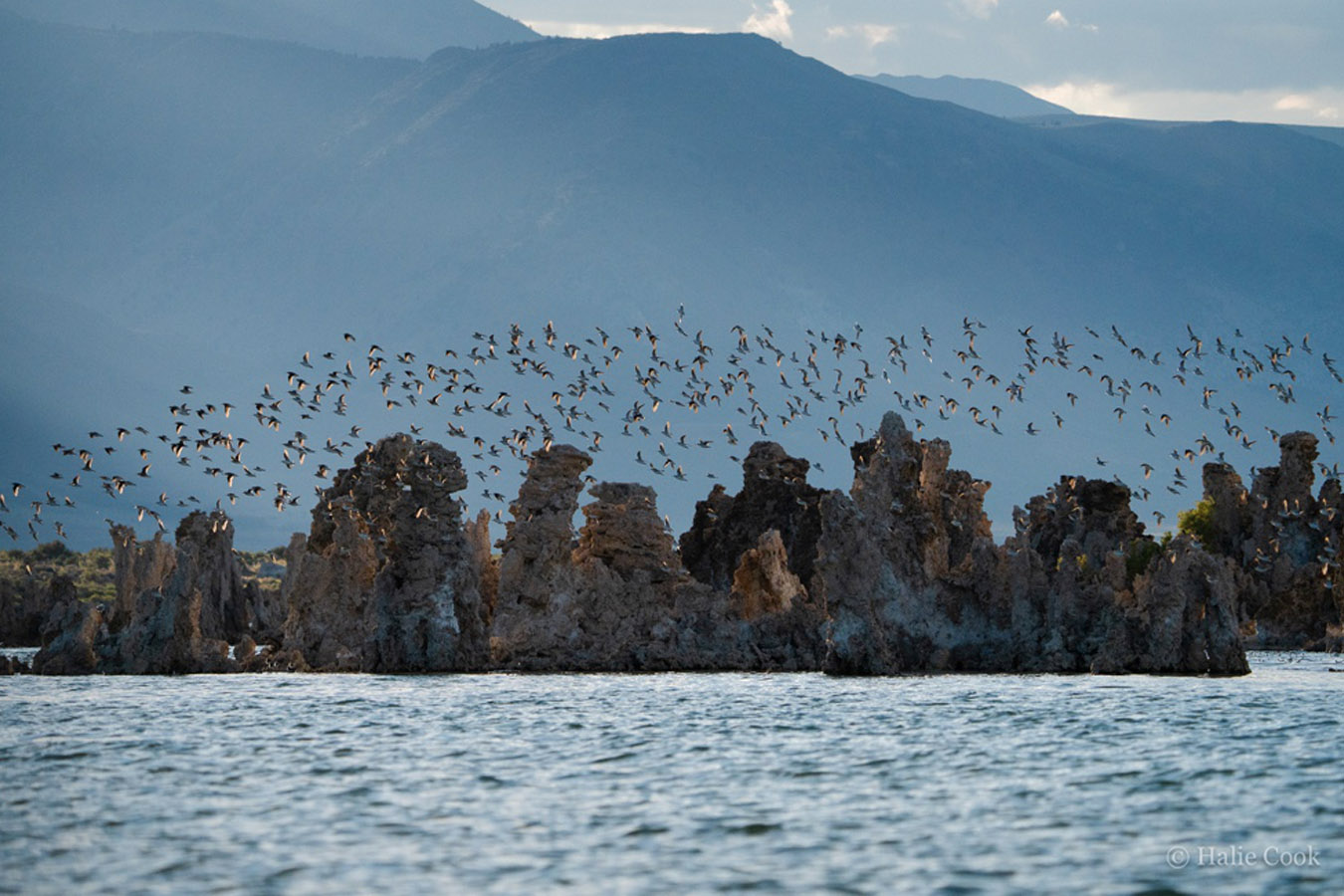
A flock of phalaropes at Mono Lake. Photo by Halie Cook.
We have been working for several years at Mono Lake, California, tagging phalaropes to better understand their movements, connectivity between habitats, and how long individuals stay at saline lakes. During 2025 and 2026, we captured and tagged a total of 5 Wilson’s Phalaropes and 16 Red-necked Phalaropes at Mono Lake. During our most recent tagging effort, our team was joined by Tully Frain from Tracy Aviary, who has been tagging Wilson’s Phalaropes at Great Salt Lake.
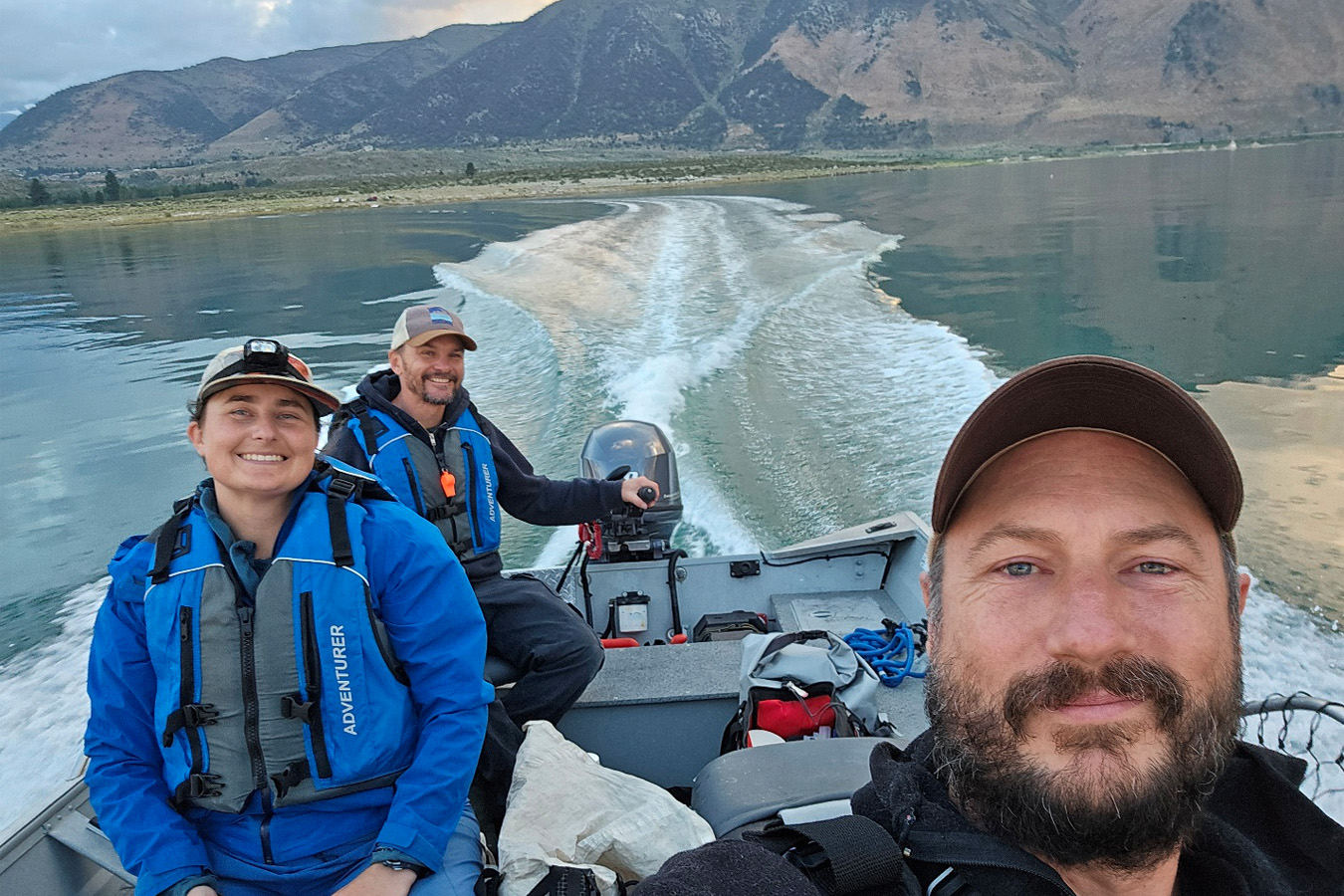
The tagging crew going out for the night, left to right, Nora Livingston, Ryan Carle, and Forrest English.
Phalaropes have proven challenging to capture at Mono Lake, and after several years of developing and refining our methods, we have finally found one that works. We go out on the lake at night in a boat, spotlight the birds, and then scoop them up with a hand net when they freeze in the headlights, so to speak. This method works especially well for Red-necked Phalaropes, and the tags we have deployed at Mono Lake are providing virtually the only tagging data we have so far for the species in the Americas.
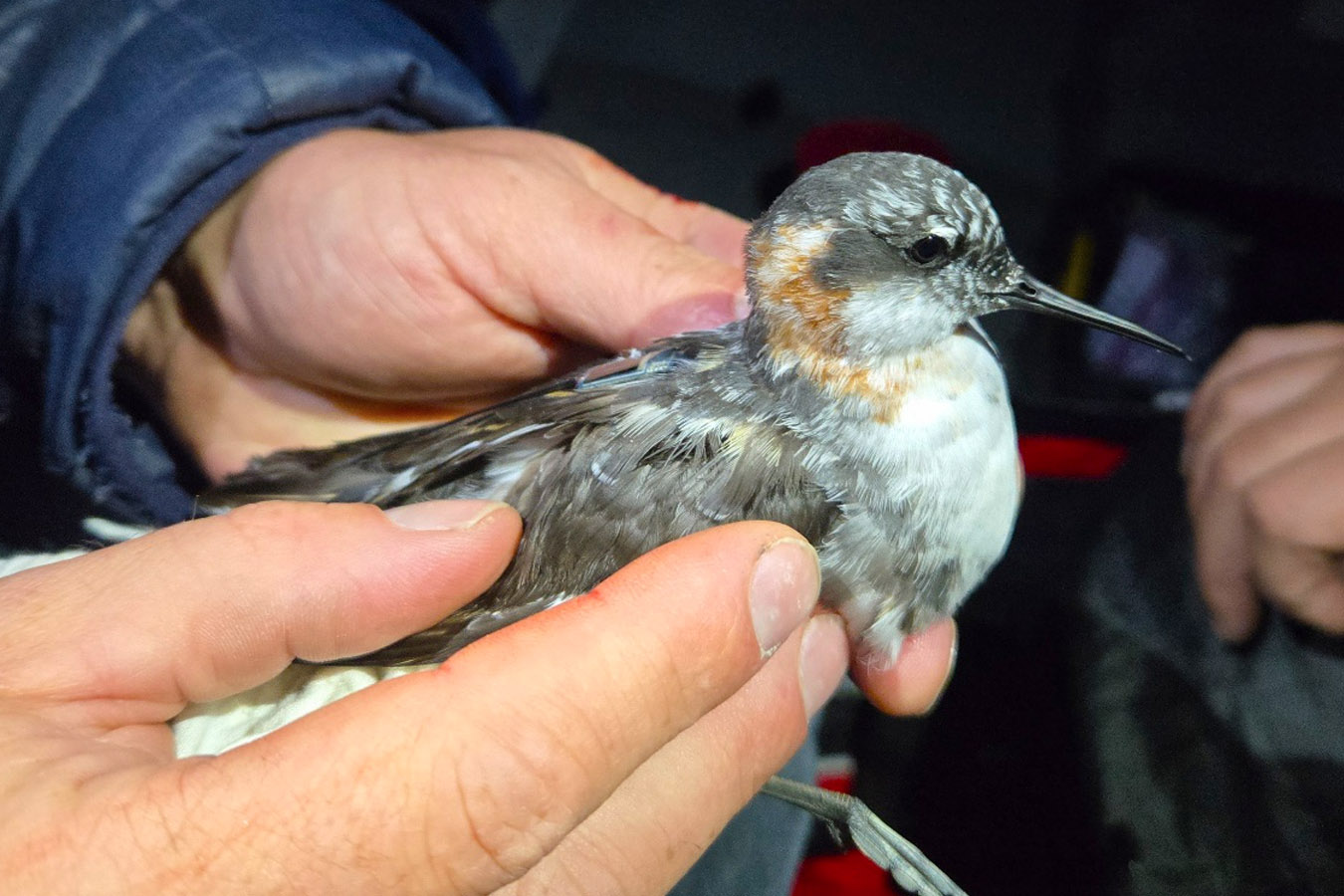
A tagged Red-necked Phalarope from Mono Lake.
After departing Mono Lake, all tagged Red-necked Phalaropes have so far followed a similar pattern of flying to the Pacific Ocean off Southern California in about 24 hours. Some have subsequently been detected along the coast of Baja California, Mexico, while others have turned back inland, making their way to the Salton Sea and the Colorado River Delta. We are also getting the first-ever tagging data on how long Red-necked Phalaropes stay at Mono Lake, a question that is critical for interpreting population survey data. The quick transition from saline lakes to marine environment by the Red-necked Phalaropes also underscores another mystery about them—we don’t know which birds use inland vs. marine migratory routes, and how much those routes overlap. Though we have so far uncovered just a small slice of the migratory lives of Red-necked Phalaropes from Mono Lake, tagging has already provided a great deal of new information and sparked many new questions!
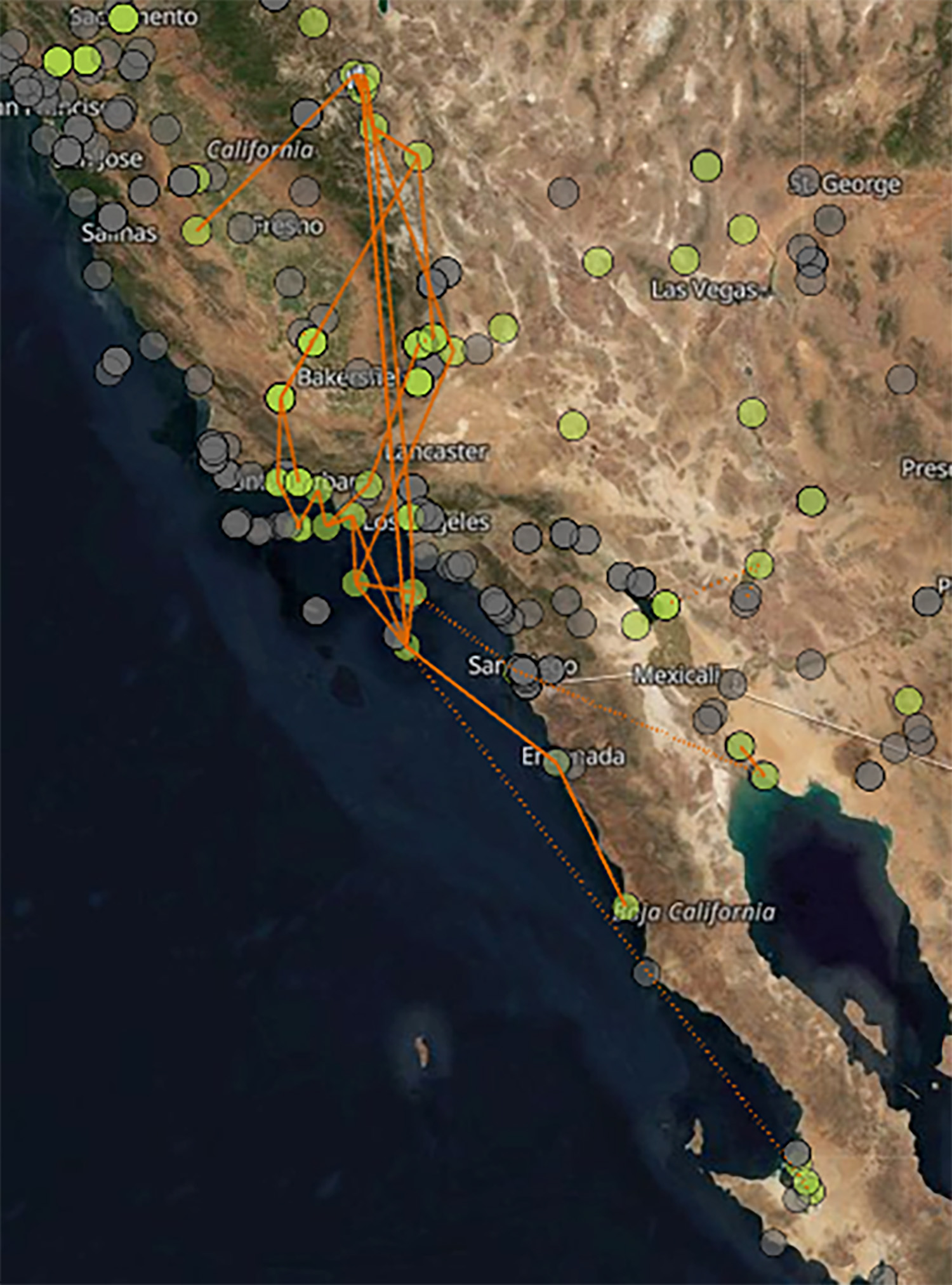
Map of Red-necked Phalarope tracks from Mono Lake. You can watch the progress of tagged phalaropes at our Motus project page, or the Motus species pages for Red-necked and Wilson’s Phalaropes.
If you’d like to learn more, you can see a recording of my presentation from the 2025 Pacific Seabird Conference on Red-necked Phalarope tagging here: https://www.youtube.com/watch?v=qrg99yzn3sM.
This project is a collaboration between Oikonos & Dr. Margaret Rubega, with essential Motus-tower support from the Mono Lake Committee.

Written by Ryan Carle
September 16, 2026