

Students from Isla Mocha’s school learn about water quality monitoring and the small organisms that inhabit the streams. Their Natural Science teacher, Cristian Poza, shows them the water pH indicator.
Freshwater is essential for life. Its quality has a direct impact on the health of ecosystems and on the well-being of the communities that rely on it. In places like Isla Mocha, where streams and creeks are crucial for both biodiversity and local life, understanding water conditions becomes even more important. That’s why we’ve started regular monitoring efforts that allow us to observe, learn, and protect this vital resource through a local and participatory approach.
In March 2024, Oikonos and Fundación Regenerativa partnered to train 10 local residents in a collaborative watershed monitoring method developed by Global Water Watch, with support from Fundación Manzana Verde. This training laid the groundwork for a long-term community science effort.
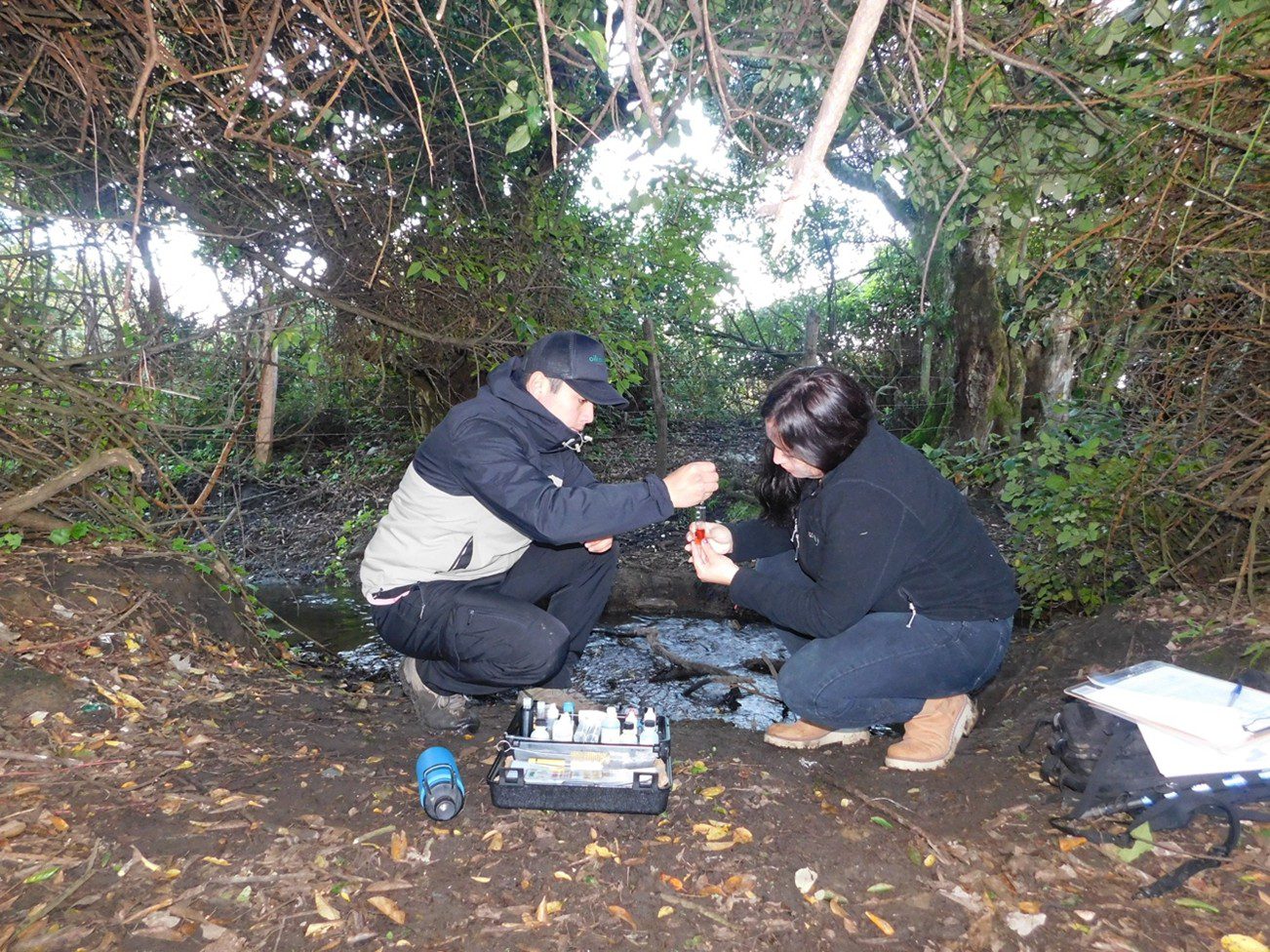
Jacob Parra and Tiare Varela, local members of the Oikonos team, conduct monthly water quality monitoring activities that actively involve the students and local community.
- Physical-chemical monitoring: We measure key indicators such as water and air temperature, turbidity, dissolved oxygen, pH, alkalinity, and hardness. These help us understand the water’s condition at that moment.
- Bacteriological monitoring: We collect water samples using special test cards that detect the presence of Escherichia coli, a bacteria found in human and animal feces. The cards are incubated for 24 hours in a medium that reveals the bacteria if present. This method is simple yet very effective for identifying fecal contamination.
- Macroinvertebrate monitoring: We collect tiny aquatic creatures (macroinvertebrates) that live in the streams. Their presence, or absence, tells us about the ecosystem’s health, since some species are more tolerant of pollution than others. This activity is especially fun, especially when done with students, as it reveals a hidden world full of fascinating little organisms that often go unnoticed.
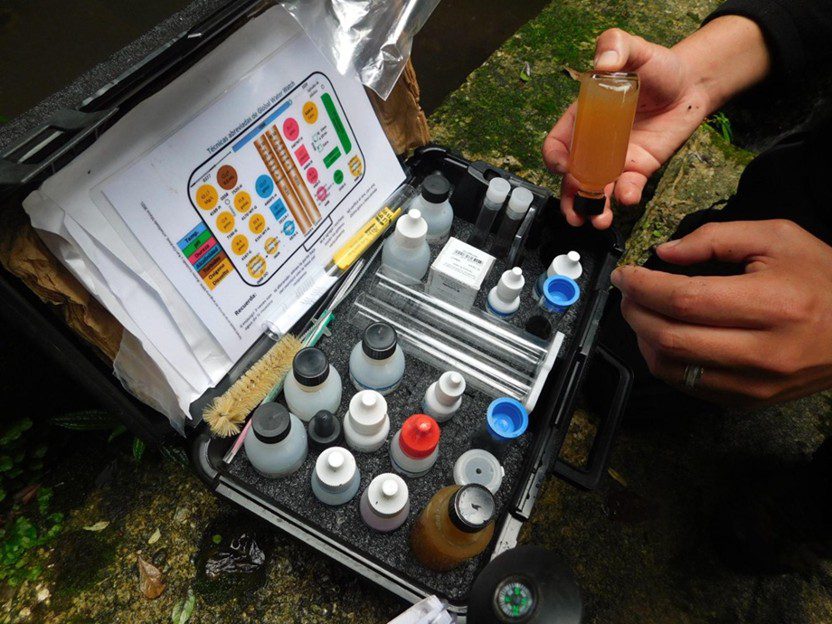
Jacob Parra from the local Oikonos team mixes the bottle with the oxygen sample, after adding some reagents that help determine the concentration of oxygen in the water.
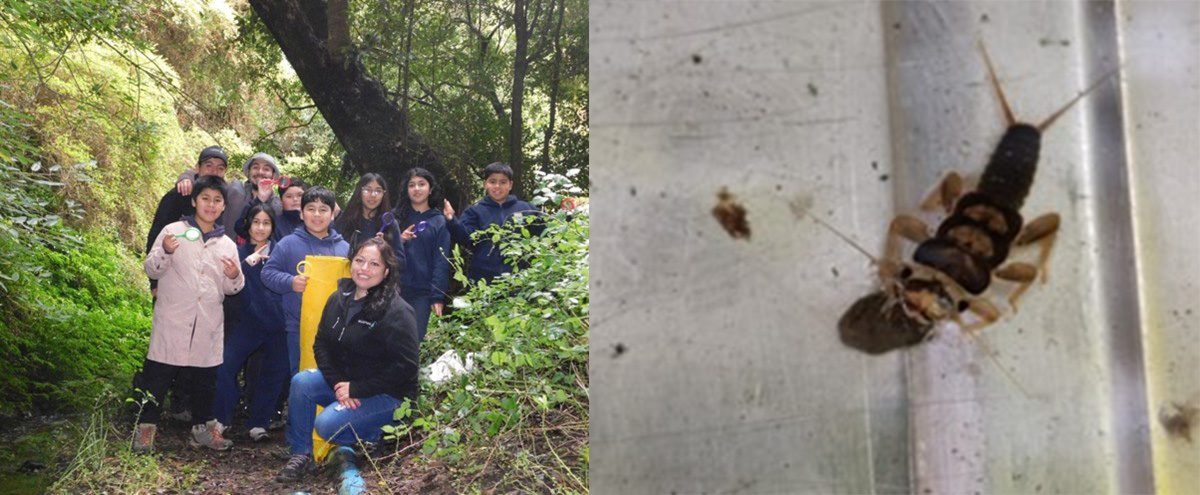
Students enjoy discovering the tiny organisms that live in the streams, like this stonefly, which is highly sensitive to pollution and provides important clues about the health of these ecosystems.
This work is carried out by the Oikonos team on Isla Mocha in collaboration with the local community members trained in 2024. Their involvement has been essential in bringing this initiative to life from within the community itself.
“Each trip to the field is different. There’s always something new to observe and learn. This journey has been incredibly enriching, opening our eyes to a world completely different from the forest. Now, in addition to watching birds and insects, we’re discovering aquatic invertebrates and gaining a deeper understanding of their role in the ecosystem. Along the way, we’ve had great conversations, shared knowledge, and built stronger connections with the people who are part of this process.
We also occasionally carry out activities with the local school’s science class, which gives us the chance to teach and learn alongside the children and their teacher. It’s inspiring to see their curiosity and excitement about learning more about water and the life it supports. For many, it’s their first encounter with this kind of fieldwork, and watching them marvel at the tiny water creatures gives us hope and motivation.” Tiare Varela, Project Supervisor on Isla Mocha.
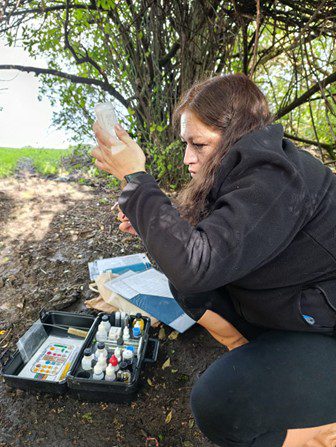
Tiare Varela has been a dedicated member of the Oikonos team for over a decade, continuing her legacy of learning and protecting the natural resources of Isla Mocha.
Continuing this monitoring work is essential. It allows us to understand the current health of Isla Mocha’s freshwater ecosystems, which until now have been little studied. The data we collect can help identify sources of pollution, track changes over time, and guide informed decisions to protect these waterways. Just as importantly, by involving the local community, we strengthen knowledge and commitment to environmental care, laying a strong foundation for long-term conservation.
Written by: Tiare Varela
Edited by Gabriela Lamanna & Montserrat Lara
August 12th, 2025